Early Voting Is Open in Ithaca Through Nov. 1: Hours, Location and What to Bring
Every registered voter in Gratiot County can vote early at the Commission on Aging in Ithaca, whatever city or township they live in. Weekday and weekend hours differ.
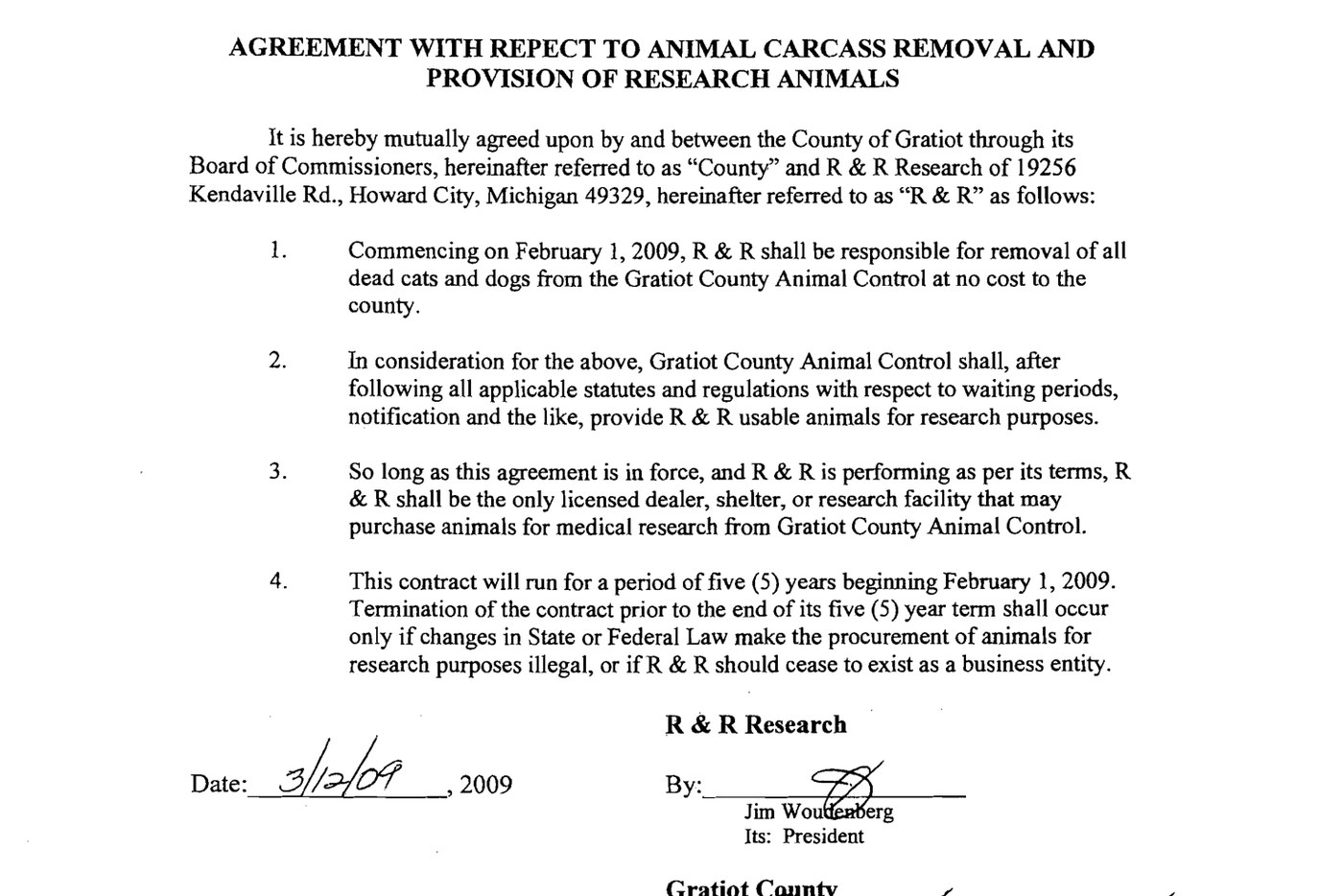
Two dogs tied to Gratiot County gave their names to bills in Lansing. County records show the contract behind the practice, a 2012 vote to limit it, and what is still not known.
Some stories are not finished when we first publish them. When a developing report has gone as far as the record allows, we close it and state the final status. A closed report can still be updated with a dated note if an answer arrives, and every update is logged.
ClosedFinal status, Oct. 2, 2026: no reply to our follow-up; the county administrator will not answer anonymous questions
County administrator cites FOIA requirements and declines anonymous questions; publication seeks clarification on how county departments handle media inquiries.
Request for comment sent
Sept. 17, 2026
Reply came from
County Administrator
Final status
Closed Oct. 2: no reply to follow-up
Read the full report
GRATIOT COUNTY — A request for comment that Gratiot County Whistleblower sent to the county's Animal Control director after the Sept. 15 Board of Commissioners meeting was answered by the county administrator, who wrote that he is the board's official spokesperson and that he will not respond to questions posed by anonymous persons.
This publication is a participant in the exchange described here, not an outside observer of it. For that reason the report relies on the emails themselves, quoted exactly as written, and separates what those emails establish from what they do not. It reaches no conclusion about why any person acted as they did.
The Original Request
Commissioners discussed Animal Control at length during the Sept. 15 meeting, including a request to reclassify Animal Control officers' pay. To understand the department's perspective on those topics, the publication emailed Animal Control Director Jaime Haase on Sept. 17, 2026, under the subject line “Questions Regarding the September 15 Meeting.” The full text follows, unedited, including a misspelling of the director's first name in the greeting.
Hello Jamie
I am reaching out on behalf of the Gratiot County Whistleblower page.
The purpose of this page is to help provide the public with clear, documented information about local government, public meetings, county departments, policies, spending, and other matters that affect Gratiot County residents. Our goal is not to spread rumors or attack individuals, but to ask questions, review available information, and give departments or officials an opportunity to provide their perspective when questions or concerns arise.
We are currently looking into some of the topics discussed during the September 15 meeting and would like to better understand Animal Control’s perspective on a few of those issues.
Would someone from Animal Control be willing to answer a few questions via email or contact us on Messenger when you have time?
For privacy reasons, the person operating this page will remain anonymous, but these questions are being asked in good faith, and any responses provided will help us accurately represent Animal Control’s position.
Thank you for your time and consideration.
Best regards, Gratiot County Whistleblower
The email asked whether someone would answer questions. It did not ask for any public document or record.
Animal Control Seeks Guidance
Later that morning, Haase forwarded the email to Gratiot County Administrator Timothy J. Dolehanty. Her forwarding message, which appears in the email thread reviewed by this publication, reads:
Please advise on how I should respond. I have also forwarded this to Tom and asked for his opinion as well. I would like to work with both of you to ensure it is a proper response.
The message does not further identify “Tom,” and this report does not attempt to. The documented fact is that the director sought guidance before responding.
County Administrator Responds
Dolehanty responded after Haase sought administrative guidance. His reply came directly to Gratiot County Whistleblower, and the body of his email reads:
Hello.
Thank you for your inquiry into topics discussed at the September 15 meeting of the Board of Commissioners.
As the official spokesperson for the Gratiot County Board of Commissioners, you may direct inquiries and requests for public documents to my attention. Please note that the Freedom of Information Act (FOIA) requires that all public document requests must include the requesting person's complete name, address, and contact information. Addresses must be written in compliance with United States Postal Service addressing standards and contact information must include a valid telephone number or electronic mail address (MCL 15.233). Likewise, I will not respond to questions posed from anonymous persons.
My contact information is provided below. I look forward to hearing from you regarding topics discussed at the September 15 Board of Commissioners meeting.
Respectfully,
Timothy J. Dolehanty Gratiot County Administrator FOIA Coordinator
The reply did two things. It identified Dolehanty as the official spokesperson for the Board of Commissioners and as the county's FOIA coordinator. And it stated that he will not respond to questions from anonymous persons.
Request for Comment vs. Public-Records Request
The two are different things. A request for comment asks a person or an office to answer questions. A public-records request asks a government body to produce documents, and Michigan's Freedom of Information Act sets out how such requests are made.
The Sept. 17 email was the first kind. It asked whether someone at Animal Control would answer questions and requested no documents. The administrator's reply addressed both inquiries and requests for public documents, and it cited FOIA's identification requirements for the latter.
This report draws no legal conclusion from that. It notes only that the original email did not seek records.
What the Emails Establish
The publication asked Animal Control for its perspective on topics from the Sept. 15 meeting.
The Animal Control director forwarded the request to the county administrator and asked how she should respond.
The county administrator replied to the publication himself.
He identified himself as the board's official spokesperson and as FOIA coordinator.
He wrote that he will not respond to questions posed by anonymous persons.
The original email did not request public documents.
What Is Still Unknown
The current record does not establish any of the following. Each is an open question, not a finding.
Whether Animal Control employees are allowed to respond directly to media questions.
Whether county departments are required to send media inquiries through the county administrator.
Whether Haase simply chose to seek guidance in this instance.
Whether the county has a written media-relations policy.
Whether there is an internal directive that is not publicly posted.
Why FOIA requirements were included in a response to an email that did not request records.
Nothing in the emails shows that anyone was prevented from speaking, that any law or policy was violated, or what any person's reasons were.
Where It Stands: Closed Oct. 2, 2026
On Sept. 19 we asked the administrator whether Animal Control employees may answer our questions directly, or whether all questions about county departments must go through his office. As of Oct. 2 he had not replied, and his Sept. 17 email says he will not respond to questions from anonymous persons. We have closed this report with that as its final status. If the county answers, we will add the answer in full.
Our requests. County: one request for comment (Sept. 17), answered by the administrator rather than the department, and one follow-up (Sept. 19) with no reply. Separately, on Oct. 2 we emailed four requests for comment to the City of St. Louis, federal energy regulators and the Michigan Public Power Agency for a report on the St. Louis hydroelectric plant, each with a requested reply date of Oct. 9. All of our requests are listed with their full text on the Requests for Comment Log.
What we are doing. We are recruiting three to five volunteer public representatives who will contact public officials under their own names on the publication’s behalf.
Our position. This is the publication’s view, not a finding. A publisher needs to be able to ask the officials and departments that hold the information. Sending every question about a county department through one office, and declining questions from anonymous persons, limits what we can verify and what readers can learn. The county decides how it responds, and we will keep contacting officials and departments directly. Any county official named here is welcome to respond, and any response will be added.
Some officials will not answer questions from an anonymous publication, and FOIA requests need a real name and address. We are looking for three to five Gratiot County residents to contact public offices, ask our questions and file records requests under their own names, on our behalf.
We give you the questions that must be asked. You may add up to five of your own and ask follow-ups freely. The role is unpaid, and your name will appear on the letters and requests you send.
Our coverage includes local people, education, public safety, events and community life alongside government accountability. Each original report identifies its sources and separates confirmed facts from what remains unknown.
Updated October 25, 2026
Local people & public safety
Greg Hatcher Learning Commons at Alma College. Jake Kelley graduated from Alma in 2024. Photo: Rathtj, CC BY-SA 4.0; cropped.
The self-taught cook and 2024 neuroscience graduate won the national competition after advancing through a season built around global cuisines and cultural heritage.
Read the full article
ALMA — Jake Kelley, an Alma College class of 2024 graduate who grew up in Hemlock, won Season 16 of MasterChef: Global Gauntlet in the finale broadcast Sept. 16.
Kelley finished ahead of fellow finalists Heidi Muston and Peter Egede. Coverage of the finale identifies the award as the MasterChef title, trophy and a $250,000 prize.
The season's judges were Gordon Ramsay, Tiffany Derry and Joe Bastianich. According to TV Insider's interview with Kelley, his three-course finale menu opened with a smoked appetizer he named for the kraken, the sea monster of legend, followed by a traditional mole served with octopus and a dessert of profiteroles with ice cream, coulis and ganache.
Alma College profiled Kelley in June while the competition was still underway. The college reported that he earned a neuroscience degree, taught himself to cook through online videos and used food to connect with classmates. Kelley represented his Mexican heritage during a season in which contestants drew on cultural traditions.
Mole was also how he got on the show. The college reported that his audition dish was a mole-inspired dessert: chocolate-chili ganache, almond sponge cake and a black sesame crème anglaise. Kelley told the college that Mexican cooking carries history and nuance that people do not always get to see.
His Alma years included the iGEM program, Student Congress, marching band and the rock climbing club. The college also reported that he worked as a pharmacy technician and was beginning to take private-chef clients while building restaurant experience.
He lived in Bruske and Newberry halls and joined the TKE fraternity, the college said, and cooking for other students became part of campus life. “It was one of the ways I met people,” he told the college.
The win changes his plans. TV Insider reported that Kelley set aside the idea of pharmacy school, moved to metro Detroit and joined the kitchen at Vecino, a Mexican restaurant that was named to a New York Times list of the best Mexican restaurants in the United States.
The two sources describe his roots slightly differently. Alma College identifies his hometown as Hemlock, in Saginaw County; TV Insider lists Alma. This article follows the college's account of where he grew up.
Road Commission workers made the discovery April 7 near Michigan Avenue. Public reports reviewed for this update did not identify the person or establish a cause or manner of death.
Read the full article
PINE RIVER TOWNSHIP — Gratiot County Road Commission employees found human remains April 7 while performing maintenance along northbound U.S. 127 near Michigan Avenue, according to reports based on information released by the Sheriff's Office.
The remains were found beyond the guardrail on the east side of the northbound lanes. Michigan State Police forensic personnel and a K-9 team assisted, and the Michigan State University Anthropology Unit confirmed the remains were human.
Authorities sent the remains to the Genesee County Medical Examiner's Office, working with the MSU unit, for examination and identification. Reports published in April said that work was continuing.
CBS News Detroit attributed the initial information to Sheriff Tom Clark's office. None of the April reports gave an estimate of how long the remains had been at the site, described their condition, or said whether investigators suspected a crime. None included a public request for tips.
In general, forensic anthropologists are brought in when remains cannot be identified by sight, and identification can then depend on dental records, DNA comparison and missing-person files, work that often takes months. That general practice is context; officials have not described the specifics of this case.
More than five months have passed since the discovery. This publication searched again on Sept. 19 and found the same April reports, with no later announcement from the Sheriff's Office or the medical examiner.
No conclusion about foul play, identity or circumstances should be drawn from the location alone. We will update this report if the Sheriff's Office, medical examiner or another responsible agency releases confirmed findings.
Alma College says total fall enrollment is five students higher than last year, while its full-time and transfer counts show larger gains.
1,229
Total students
+28
Full-time students
+27.3%
Transfer enrollment
Read the full article
ALMA — Alma College reported total fall 2026 enrollment of 1,229 students, an increase of five from fall 2025.
The college's Sept. 17 release says full-time enrollment increased by 28 students and undergraduate full-time-equivalent enrollment rose by 10.1. New undergraduate enrollment was described as stable.
Transfer enrollment increased 27.3%, according to the college. Alma also reported fall-to-fall re-enrollment rates of 82.4% for first-time students and 86% for transfer students.
The college described the 82.4% figure for first-time students as its second-highest in a decade. Re-enrollment measures how many students who started one fall came back the next.
President Joe Odenwald said in the release that the numbers show Alma can attract and keep students in a highly competitive environment. He pointed to graduate programs, transfer students and full-time enrollment as the areas of growth. The release does not give a separate head count for graduate students.
In August, Alma added a chemistry pathway with Montcalm Community College, joining accounting, business, communication and psychology routes that date to 2023.
A five-student gain is small next to a total of 1,229, a change of less than half of one percent. The larger movement is inside the total: more students attending full time, and more arriving from other colleges.
Alma's Ezekiel Baltierra took first in the boys Bronze Division race Sept. 11, according to MileSplit Michigan's published meet recap.
Read the full article
EAST LANSING — Ezekiel Baltierra of Alma won the boys Bronze Division, Division 2 race at the 2026 Spartan Invitational with a reported time of 16 minutes, 5 seconds.
MileSplit Michigan's race recap says Baltierra moved ahead early and won by 15 seconds. Petoskey won the team competition with 102 points; Alma finished second with 118.
In cross-country, a team's score is the sum of its top five runners' finishing places, so the lowest total wins. A 16-point gap means Petoskey's scoring runners finished, on average, about three places ahead of Alma's.
MileSplit credited Petoskey's win to a strong finish from its top two runners, Reeve Oberman and Jack Frentz, and called the result an upset based on preseason ratings that had Alma among the top five teams. The recap does not list places or times for those two runners.
The Sept. 11 meet was held at Forest Akers East Golf Course in East Lansing. Michigan State University hosted the 45th annual Spartan Invitational, which included college and high-school competition.
The Nov. 3 question would add elementary classrooms and replace 1966-era plumbing. The ballot says 2027 debt millage would stay at its current level, with an average of 2.22 mills over 15 years.
Read the full article
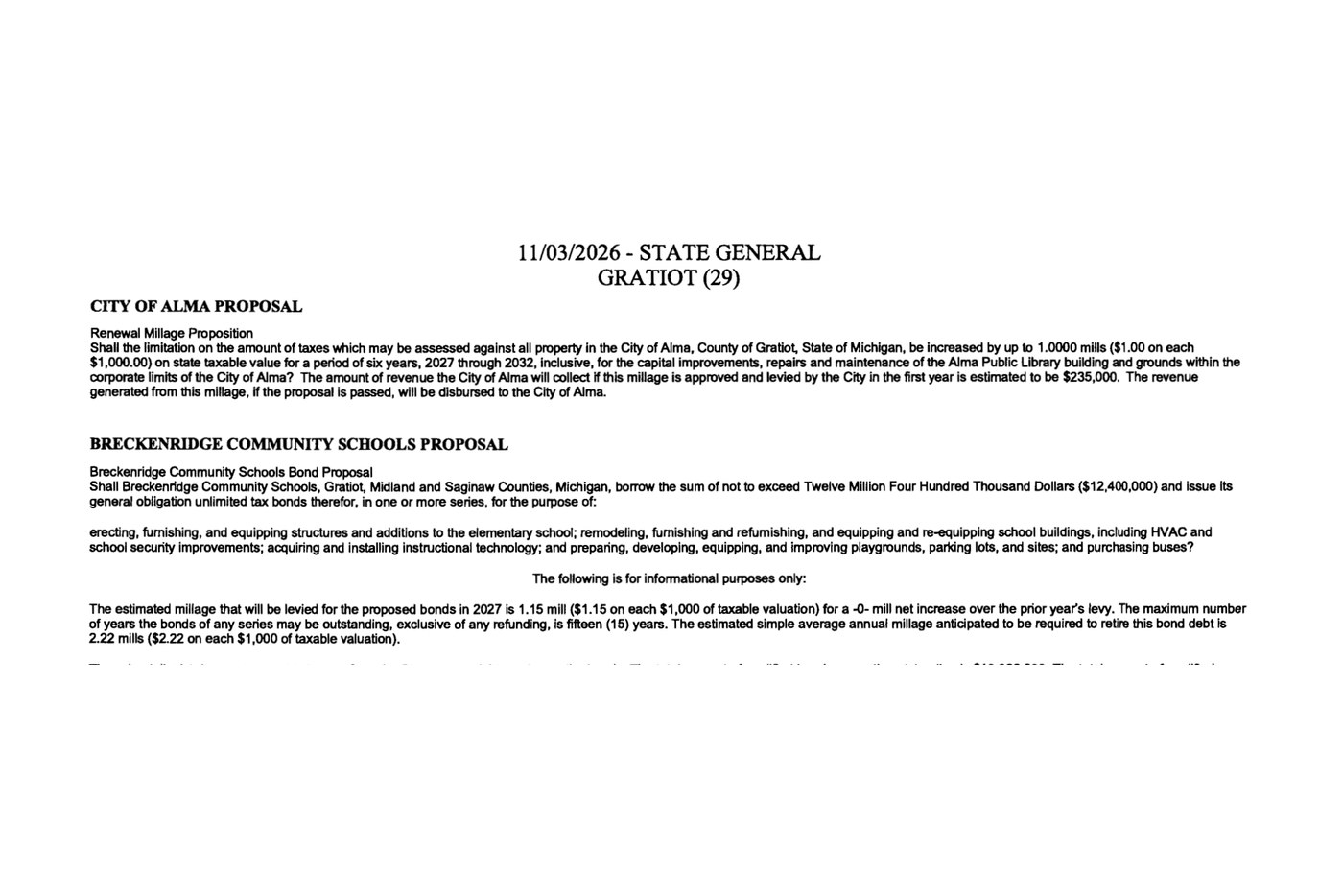
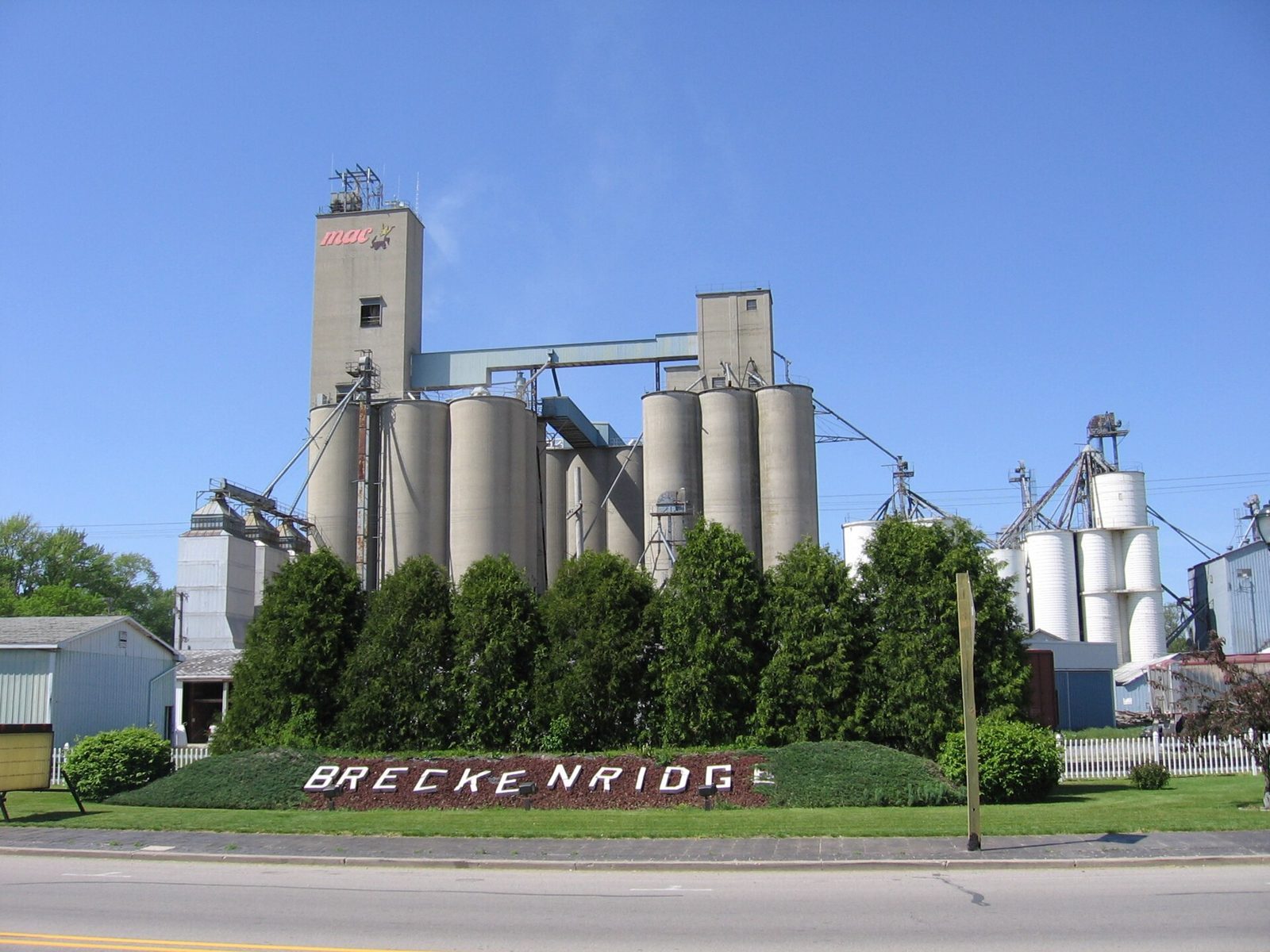
BRECKENRIDGE — Breckenridge Community Schools is asking voters Nov. 3 to approve borrowing up to $12.4 million in general obligation bonds, according to the ballot language on the county clerk’s unofficial proposal list.
The question lists the purposes as “erecting, furnishing, and equipping structures and additions to the elementary school; remodeling ... school buildings, including HVAC and school security improvements; acquiring and installing instructional technology; ... improving playgrounds, parking lots, and sites; and purchasing buses.”
The district’s bond page describes the plan in more detail: four new elementary classrooms, an expanded cafeteria and kitchen, parking and traffic changes, playground work and secure entries, plus replacement of the middle/high school’s underground plumbing, which dates to 1966, and its kitchen, ventilation, electrical and PA, bell and clock systems.
On cost, the ballot’s informational section says the estimated 2027 levy for the new bonds is 1.15 mills, “for a -0-mill net increase over the prior year’s levy,” and that the “estimated simple average annual millage” to retire the debt is 2.22 mills over a maximum of 15 years. The district says the total debt levy would stay at 3.80 mills. The district has $10,955,000 in qualified bonds outstanding. In plain terms: the tax rate is not projected to rise, but the district would be paying on debt for longer than it otherwise would.
The district traces its current debt to a 2009 bond (3.4 mills), a 2012 extension and a 0.4-mill addition approved in 2020. State law requires bond proceeds to be audited and bars using them for maintenance, salaries or other operating costs. Questions on the proposal go to Superintendent Wade Slavik at (989) 842-3182.
The district serves parts of Gratiot, Midland and Saginaw counties, so voters in all three will see the question.
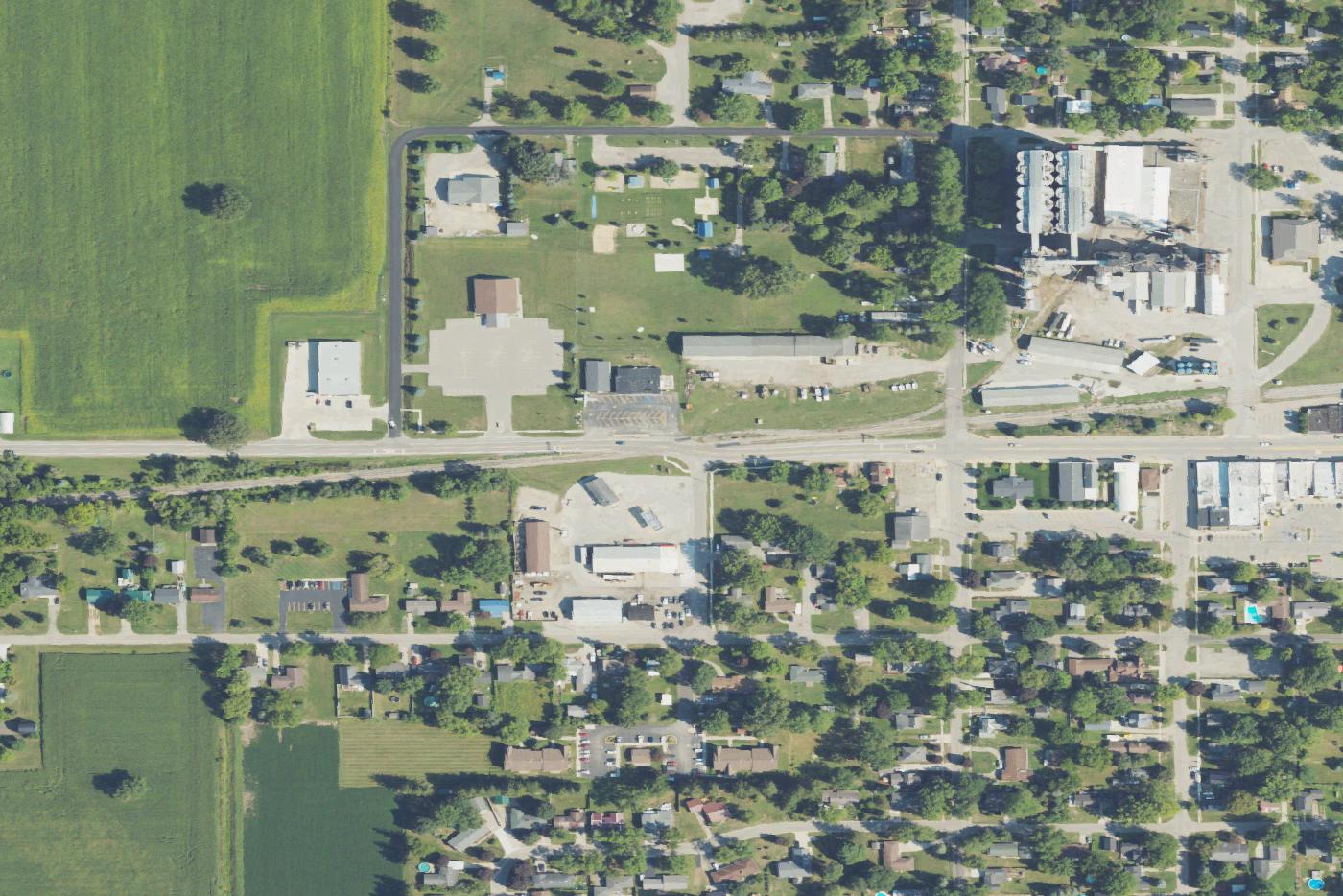
The North Alger Road corridor in Alma, where the call was dispatched, from the air. Image: USDA NAIP aerial imagery via the U.S. Geological Survey, public domain; cropped.
An evening radio call about an ambulance at a North Alger Road credit union was corrected on the air within minutes. No agency has released a report.
Read the full article
ALMA — At about 6:56 p.m. Monday, Gratiot County dispatch radio carried a call about a possible stolen ambulance at Michigan One Community Credit Union on North Alger Road. Within minutes, according to the same radio traffic, the call was corrected: the ambulance, an MMR unit, had been sideswiped, not taken.
That is the whole of what is known tonight. The audio does not say whether the ambulance was on a call, whether anyone was aboard or hurt, what struck it, or whether it stayed in service.
We are noting it because the first version of the call, a stolen ambulance, is the kind of thing that travels fast on social media and scanner apps, and the correction usually does not travel with it. The corrected version is the one the dispatch traffic settled on.
What the audio does not establish: whether the ambulance was responding to a call; whether a patient or crew were aboard; whether anyone was injured; what vehicle struck it and whether that driver stopped; whether the unit was taken out of service; and why the call was first described as a theft.
This report rests on publicly broadcast dispatch radio traffic, as summarized by a scanner-monitoring service, and nothing else. Scanner audio is real-time and often wrong on first pass; this call is an example. Gratiot County Central Dispatch keeps event reports for ten years but does not post them online. Neither MMR, Alma Police nor Central Dispatch has been reached for comment; any of them is welcome to respond at contactus@gcwhistleblower.com, and the response will be published.
Students who finish an associate degree at Montcalm Community College now have a mapped two-year path to a chemistry bachelor's degree in Alma, the college says.
Read the full article
ALMA — Alma College and Montcalm Community College have added chemistry to the list of majors covered by their transfer agreement, the college announced Aug. 27.
Under the arrangement, a student completes an associate degree in arts or sciences at Montcalm, then transfers to Alma to finish a Bachelor of Science in chemistry. The college describes the Alma portion as two additional years.
The two schools have had a transfer agreement since 2023. Until now it covered four fields: accounting, business, communication and psychology. Chemistry is the first laboratory science on the list.
Alma says its chemistry program is approved by the American Chemical Society. Two Alma chemistry faculty members, associate professors James Mazzuca and Jeffrey Turk, are quoted in the announcement; Mazzuca said the agreement gives transfer students a clear direction.
The college describes a department built around laboratory work. According to the announcement, chemistry students do research alongside faculty, present at professional conferences and appear as co-authors on published papers. Turk called the department immersive.
For a student starting at Montcalm, which serves Montcalm County west of Gratiot, the arrangement means spending the first two years at a community college and knowing in advance what remains for the bachelor's degree. The college directs interested students to the Transfer Pathways page on its website.
The announcement arrives as the college reports growth among transfer students. In its separate fall enrollment release, Alma said transfer enrollment rose 27.3% from a year earlier.
Alma College has named its 2026 Tartan Award recipients and chosen Will Nichols, who conducted the college choirs for more than four decades, as parade grand marshal.
Read the full article
ALMA — Five Alma College graduates will receive Tartan Awards during Homecoming weekend, Sept. 25–26, the college announced. The awards are scheduled to be presented at a luncheon Saturday, Sept. 26.
The recipients, as listed by the college:
Amy McGinnis, class of 1992 — Hugh Brenneman Distinguished Alumni Award. McGinnis teaches in Central Michigan University's management department and directs student-engagement and leadership-scholar programs there. A first-generation college student, she earned a master's degree at Michigan State University and previously led human resources and communication work at Lansing Community College. The college notes six years on the West Midland Family Center board and teaching and advising awards from CMU.
Ryan Webb, class of 2000 — George and Bess (Brown) Hebert Award, which recognizes loyalty and service to the college. Webb has spent 25 years at Pfizer, where he is a team lead in cardiovascular marketing, and holds an MBA from the University of Michigan. At Alma he played four years of varsity soccer, on teams that won two conference championships, and three of tennis. He co-founded an endowed scholarship, the Eric M. Didocha Memorial Merit Award.
Brent Neubecker, class of 1995 — Smith Distinguished Service Award. Neubecker, who studied history and political science, is a former Alma College alumni director and annual fund director. He was a four-year baseball starter and captain, has been president of the Alma Kiwanis Club and coaches youth football, baseball and softball. The award is named for Art Smith, class of 1938, and Carra (Jones) Smith, class of 1942.
Libby Flatoff, class of 2021 — Young Alumni Award. Flatoff is a program and policy associate at the Arms Control Association in Washington, D.C., and holds a master's degree in nonproliferation and terrorism studies from the Middlebury Institute of International Studies. At Alma she competed in Model United Nations and on the swim team and studied in Peru and India.
Betsy Pilon, class of 2003 — Lynne Sherwood Women's Leadership Award. Pilon founded and leads Hope for HIE, a nonprofit the college says serves about 15,000 families worldwide affected by hypoxic ischemic encephalopathy, a form of infant brain injury. She co-founded a research registry for the condition and serves on national child-neurology panels. At Alma she played in the symphony orchestra and was part of the first dance team.
The Homecoming parade grand marshal is William “Will” Nichols, who led the Alma College choirs from 1983 to 2024. The college credits him with founding its Festival of Carols and leading 12 international choir tours along with more than 35 in the United States. Nichols holds a master's degree and a doctorate in music from Michigan State University. His wife, Pam, a retired Alma High School English teacher, traveled with the choirs.
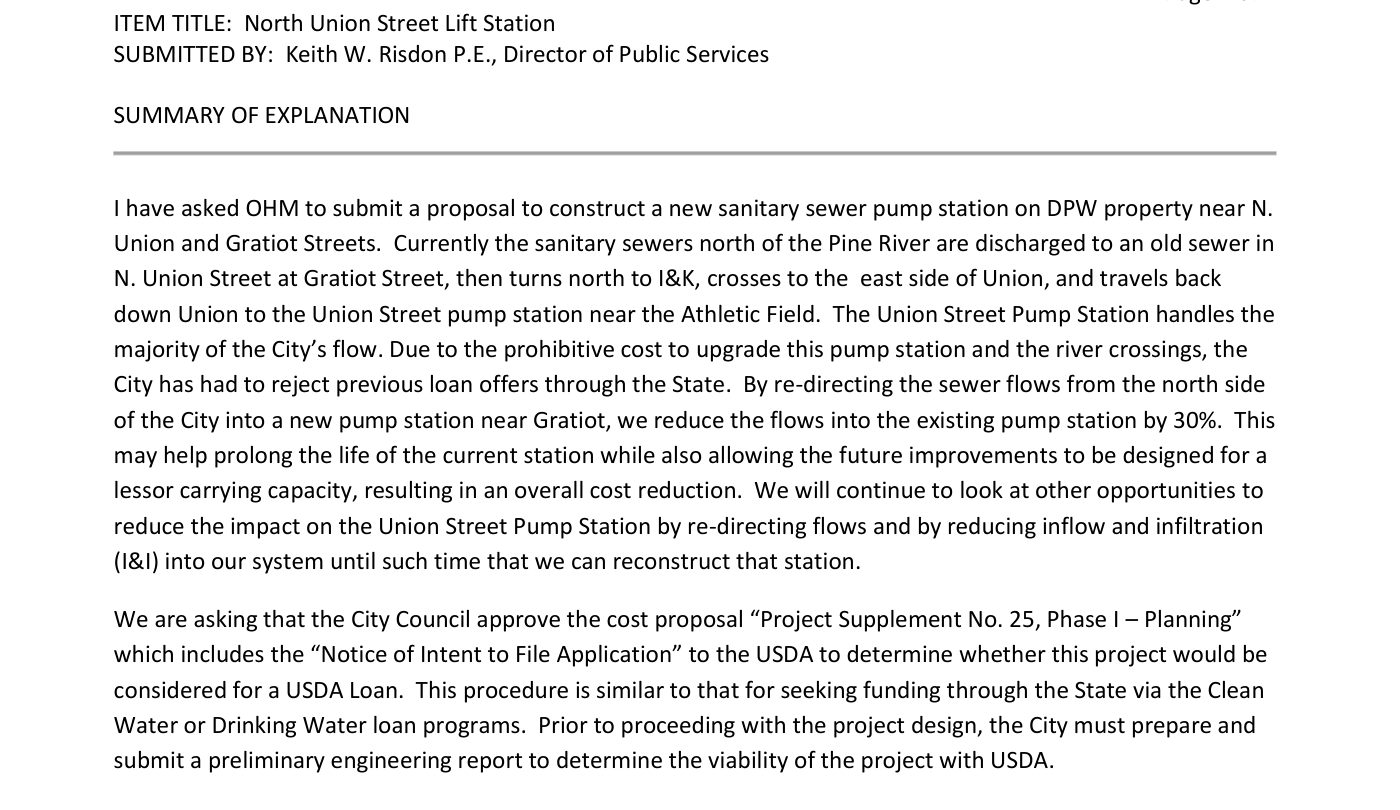
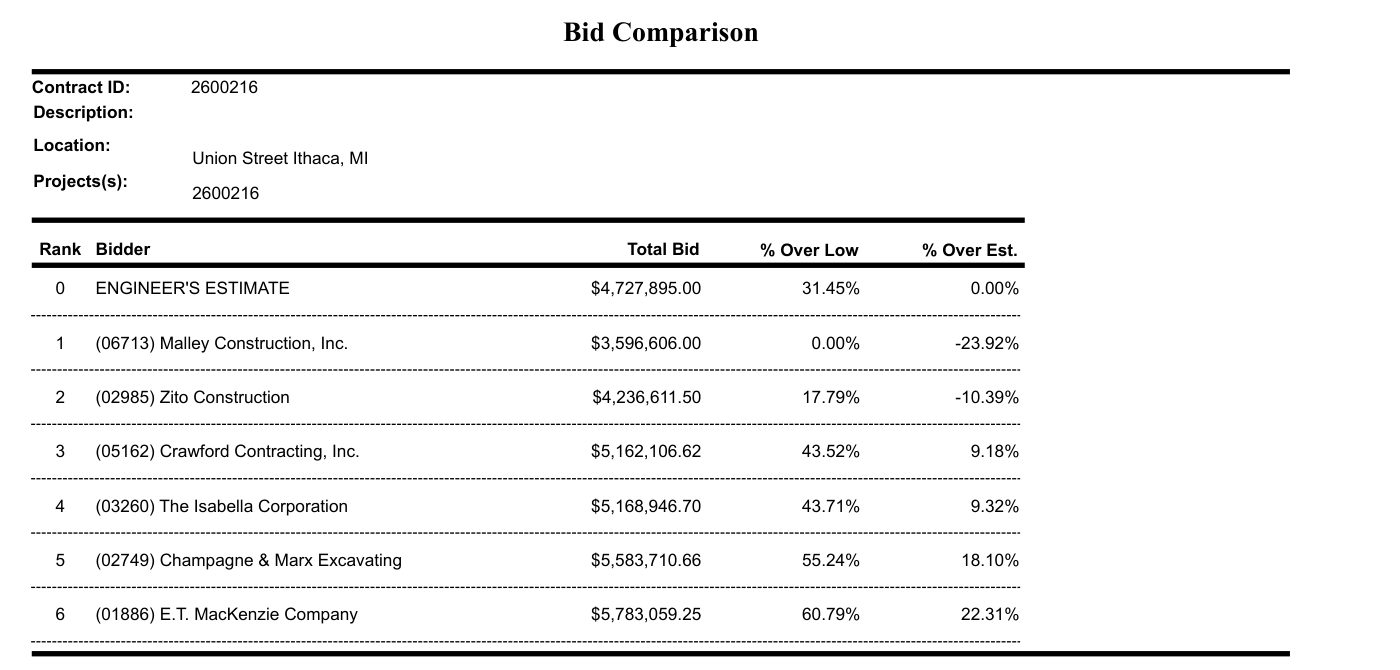
A change in Ithaca's financing plan could lower the cost of issuing debt for the Union Street project, according to the city manager's written report. The public record available Friday morning did not yet show the result of a special council vote.
Bond plan
$4 million
Advisor cost
$30,850
Verified status
Vote result not posted
Read the full article
ITHACA — City Manager Jamey Conn reported that Ithaca planned to issue one $4 million Capital Improvement Bond for the Union Street project rather than combining that issue with a separate Michigan Transportation Fund bond.
According to Conn's Sept. 15 written report, municipal adviser Bedzinski and Company recommended the change after construction bids came in favorably. The report says one larger offering was expected to attract more bidders and a more favorable interest rate.
The change also affects the cost of the bond adviser. The report lists $30,850 for one issue, compared with $47,000 if the city proceeded with two. Ithaca also reported meeting with S&P Global as part of the credit-rating process.
Conn's report puts the adviser's fee at $23,500 per bond issue, which is how two issues would have reached $47,000. It says the decision was made with Bedzinski and Company and the law firm Miller Canfield, and that Conn, the city treasurer and another participant met with S&P Global to review the city's standing and receive a credit rating for the bond.
The report also gives a glimpse of the project itself: in a separate item about a possible Arcada Street repaving, Conn mentions an opportunity to narrow that road “as we are doing on Union Street.”
The city posted notice of a special council meeting for 8 a.m. Sept. 18 to consider a resolution authorizing the 2026 capital-improvement bonds. A scheduled vote is not the same as an adopted resolution.
Every registered voter in Gratiot County can vote early at the Commission on Aging in Ithaca, whatever city or township they live in. Weekday and weekend hours differ.
Read the full article
GRATIOT COUNTY — Early in-person voting for the Nov. 3 general election is open at the Gratiot County Commission on Aging, 515 S. Pine River St., Ithaca. The county runs one joint early voting site for all of its cities and townships, so every registered voter in the county can vote there.
Hours
Saturday, Oct. 24 and Sunday, Oct. 25: noon to 8 p.m.
Monday, Oct. 26 through Sunday, Nov. 1: 9 a.m. to 5 p.m.
Early voting ends Sunday, Nov. 1. On Election Day, Tuesday, Nov. 3, polls at your regular precinct are open 7 a.m. to 8 p.m. The hours above are the ones posted by the City of St. Louis clerk and the City of Alma.
What to bring
A driver’s license or other photo ID makes check-in faster. Under Michigan election law (MCL 168.523), a registered voter who does not have ID can sign an affidavit and vote a regular ballot.
What is on the ballot
Statewide races and proposals share the ballot with local questions, including the Alma library millage, a county-wide transit millage, school board races and several school bond and operating millage questions that reach into parts of the county. Our ballot guide lists the local questions with links to our earlier reports. Your exact ballot depends on where you live; preview it at the Michigan Voter Information Center.
Questions
Questions about registration or your ballot go to your city or township clerk, or the Gratiot County Clerk’s office at 989-875-5215.
A guide to the local millages, bonds and contested races on the county clerk’s unofficial list, with links to our reports on each.
Read the full article
GRATIOT COUNTY — Beyond the statewide races and proposals, Gratiot County voters will see local questions on the Nov. 3 ballot. Which ones depends on where you live. This guide follows the county clerk’s unofficial candidate and proposal list, proofed Aug. 27.
Local proposals
Alma Public Library (City of Alma): up to 1 mill for six years, 2027 through 2032, for the library building and grounds; an estimated $235,000 in the first year. Our report.
County-wide transit millage: put on the ballot by a 4–1 commissioners’ vote June 2. Our report.
Breckenridge Community Schools bond: up to $12.4 million, with no projected change in the debt tax rate. Our report.
St. Louis Public Schools operating millage: up to 3 mills for seven years, 2026 to 2032, to restore millage lost to the state constitution’s required rollbacks. The district estimates about $110,732.87 if 1.3086 mills are levied in 2026. It applies to property other than principal residences, such as businesses, rentals and second homes; owner-occupied homes are exempt.
Merrill Community Schools operating millage: a non-homestead operating millage for 2027 through 2036, estimated at $779,321 in 2027, for Gratiot voters who live in the district.
Shepherd and St. Johns school bonds (up to $14.9 million and $40 million) and a Saginaw Intermediate School District career and technical education millage, each for Gratiot voters who live in those districts.
What a mill costs: 1 mill is $1 for every $1,000 of taxable value. A home with a taxable value of $50,000 pays about $50 a year per mill. Taxable value is printed on your tax bill and is usually well below market value.
Contested local races
Alma City Commission: four seats; three candidates filed petitions and four write-in candidates have filed declarations. Our report.
Alma Public Schools Board of Education: five candidates for two six-year seats: Justin Barnaby, Susan A. Higgins, Jennifer Post, Peggy Ann Yates and Dave Blandford.
Gratiot County Road Commissioner: Jennifer Lobdell (D) and Aaron L. VanHorn Sr. (R), for a six-year term.
Other school boards, village offices and library boards are on the clerk’s list linked below.
What this guide does not show
The clerk’s list is unofficial and scans poorly in places. The official sample ballot for your precinct, on the Michigan Voter Information Center, is the formal record of what you will vote on.
Four seats are on the ballot and three candidates filed petitions. The city manager’s newsletter lists four write-in candidates. The Oct. 27 agenda includes a software purchase and $2.5 million in investments.
Read the full article
ALMA — Four write-in candidates have filed for the Alma City Commission, where four seats are on the Nov. 3 ballot but only three candidates filed nominating petitions, according to the city manager’s Oct. 23 newsletter in the packet for Tuesday’s commission meeting.
The write-ins
The newsletter says the deadline to file as a write-in candidate was 4 p.m. Friday, Oct. 23, and that the city clerk received four write-in applications. In the order the city lists them: Emily Ahern, Justin Fonley, Erin Mayle and Mikyla Sweet. Andrew Bare, Roxann Harrington and Danny Wernick are the three candidates on the printed ballot. Commissioner Michelle Pitts’s term also ends this year, and she did not file, as we reported Sept. 18. Under the city charter, the three top vote-getters serve four-year terms and the fourth serves two years.
Tuesday’s meeting
The commission meets at 6 p.m. Tuesday, Oct. 27, at the Alma Municipal Building, 525 E. Superior St. The agenda includes:
$136,975 to BS&A Software for a cloud migration and related annual support. The vendor’s quote lists $63,100 for the upgrade implementation, with the rest in annual fees for modules including utility billing, taxes, assessing, work orders, business licenses and cemetery management.
Ratifying $2.5 million in investments: ten $250,000 purchases made Oct. 13–15, nine U.S. Treasuries through Fifth Third Securities at rates from 4.37% to 4.80%, maturing between August 2027 and September 2029, and a PNC Bank CD at 4.50%.
Two mortgage discharges under the city’s Housing Rehabilitation Program for loans dated 1997. The agenda notes the city received the payoff Oct. 22.
Speakers at public comment state their name and address and may speak up to five minutes.
Also in the city manager’s newsletter
A work session on Public Act 152 of 2011, the state law on public employers’ health insurance contributions, and on a transportation agreement with Gratiot Integrated Health Network did not take place Oct. 13 for lack of a quorum. The city manager suggests rescheduling it after the new commission is sworn in.
Eight residents attended an Oct. 22 neighborhood meeting on the Liberty Street water main. Work could start the first week of November if the state permit arrives the week of Oct. 26. The commission approved $231,520 for the project on Oct. 13.
Leaf pickup has started with the city’s new leaf vacuum. Bagged yard waste and brush pickup has ended until April 2027.
A follow-up to our Sept. 18 report on the county’s request for proposals. Round-one grants run through Dec. 31; the posted records do not list who received them.
Read the full article
GRATIOT COUNTY — Gratiot County is preparing its second round of grants from national opioid settlement money. The request for proposals we reported Sept. 18 closed Oct. 16. This report sets out what the public record shows about how much money there is and how it has been handed out.
How much
The county’s May 2025 request for proposals says Gratiot had received $615,000 from opioid settlements and expects an average of about $120,955 a year for 18 years. It notes that the amount changes from year to year.
Who decides
A steering committee, run through the Mid-Michigan District Health Department, scores proposals and recommends awards; the county holds the money, and the Board of Commissioners approves the awards. Money may go to prevention, harm reduction, treatment, recovery and education programs that serve Gratiot residents.
Round one
The committee’s June 24, 2025 recommendation covers grants running Aug. 1, 2025 through Dec. 31, 2026, and says the awards fit within the expected 18-year allocation. The recipients and amounts are not in the text of the recommendation as posted on BoardBook.
Round two
The county’s Oct. 6 minutes record, under the administrator’s report, a “meeting on Opioid” and a look at how to use the settlement money. The Gratiot County Herald reported Oct. 7 that commissioners are preparing a second round of awards. No awards from the second round have been posted.
Questions that remain
Who received round-one grants, how much did each receive, and what has each reported back?
How much of the settlement money received so far has not been awarded?
How many proposals came in by the Oct. 16 deadline, and when will the board vote on round two?
The agenda posted on BoardBook listed one new-business item. At the start of the Oct. 20 meeting a resolution for animal control was added. The recording shows what the administrator said before the 5–0 vote.
Read the full article
GRATIOT COUNTY — The animal control resolution the Board of Commissioners adopted on Oct. 20 is not on the agenda posted on BoardBook. That agenda lists one item under new business, a conservation district agreement. On the county’s recording, an animal control resolution is named after the chair asks for additions to the agenda (0:46), and the board approves the agenda “as amended” moments later. This report sets out what the recording shows beyond our Oct. 21 report. The words attributed to the administrator and commissioners are as the recording has them.
The agenda
BoardBook lists the meeting as a Regular Full Board Meeting (meeting 770982). Its agenda shows nothing under item E.1, additions and deletions, and lists a single new-business item, K.1, Resolution 26-467 for the Gratiot Conservation District. As of Oct. 23 it shows no animal control item. On the recording, the item is slotted as new business number two, and the agenda is approved as amended. The recording does not show when the resolution was written, or whether commissioners had it before the meeting began. No animal control document is posted with the agenda.
The administrator’s account of the insurance review
County Administrator Timothy Dolehanty introduced the item at about 44 minutes (44:18). He said he and the deputy administrator had met with the county’s liability carrier, the Michigan Municipal Risk Management Authority (MMRMA), about animal control officers carrying a sidearm and having a second firearm in the vehicle. He said that meeting, held Monday, Oct. 12, had been arranged before the Sept. 15 board meeting (45:19). He said the sheriff and the animal control director attended with two MMRMA representatives, one of them a former police chief working for the insurer.
He said the officers’ training is similar to what a person receives for a concealed pistol permit, that they qualify at the sheriff’s range, and that they are not certified through the Michigan Commission on Law Enforcement Standards (MCOLES). He said officers under the sheriff are also allowed to self-dispatch to law enforcement calls. He said the insurer’s representatives were surprised, and that the insurer’s underwriters concluded the risk was “far greater than what we were currently being charged for.” As of Thursday, Oct. 15, he said, the insurer added an endorsement costing an additional $95,000 a year, plus roughly $8,000 a year in workers’ compensation, “about another 100,000 a year” in all (53:10).
He said the insurer might reduce the endorsement if the board acted but did not guarantee it, and would not say more “until and unless the board says this is what we want to do.” He said waiting until the Nov. 3 meeting would cost more than $5,000, “that’s the price to wait” (56:49).
Two resolutions and a chain of command
He presented two alternatives. One kept Animal Control under the sheriff and directed the sheriff to end officers’ firearms access and law-enforcement response. The other assigned the agency to the administrator’s office, effective immediately, and directed the administrator to do the same. He explained the difference by authority: the sheriff is an elected official and co-employer, so a board direction to him “does not guarantee” compliance and he is “under no obligation to follow your direction.” Of the second option he said: “You direct me to do that, either I do it or I’m history” (55:09). A third provision of the second resolution authorizes the administrator to set policy and operations for the agency, subject to board policies, collective bargaining agreements and state and federal law.
The Dog Law
The administrator said he had planned to tell the board that the county is “not exactly compliant” with the Dog Law of 1919 (50:59). He described two models: hiring animal control officers for two-year terms, or adopting an animal control ordinance. Of the county’s current setup he said, “we just have done it without an ordinance.” The resolution cites Section 29a of the law. The text of that section, MCL 287.289a, says a county board “by ordinance may establish an animal control agency,” that the agency “shall employ at least 1 animal control officer,” and that the board may assign the agency to any existing county department.
The sheriff
The administrator said Sheriff Tom Clark was at a conference in Traverse City and had asked the board to table the matter until the Nov. 3 meeting (56:42). The recording contains no statement from the sheriff or from the animal control director on the resolution.
At the table and the vote
A commissioner said the early-2025 vote to place Animal Control under the sheriff came after an incident in January 2025 left the county without an administrator, a period the commissioner described as “turmoil” (57:27). Another commissioner asked which budget the $5,000 would come from. Commissioner Jan Bunting moved to approve the second resolution, and Commissioner George Bailey supported it. On the roll call as heard on the recording (1:00:43), Bailey, Bunting, Tim Gay, Steve Sopocy and Chair Dave Owens each answered yes. After the vote, a voice at the table said the $95,000 “we saved” could go to the conservation district funding approved earlier in the meeting. No posted record yet shows whether the insurer reduced the endorsement.
A numbering question
The county’s Oct. 6 minutes, approved on the Oct. 20 consent calendar, record Resolution 26-468 as the “Two Seven Oh Grant Agreement.” On Oct. 20 the recording indicates the two animal control alternatives share the number 468, and the chair put the question as 26-468. The posted record does not say which resolution carries that number, or whether the clerk will assign the animal control resolution a different one.
Earlier in the record
The Oct. 6 minutes record, under commissioner reports, that Owens “Did a road trip with Animal Control.” The Sept. 15 meeting, where Animal Control’s director asked for a pay reclassification, is covered in our earlier report.
What the record shows and does not show
The recording shows the stated reasons: an insurer’s cost finding, the Dog Law, and the administrator’s view of who can direct whom. It does not establish why the item was added at the meeting rather than posted in advance, and it establishes no motive beyond the reasons stated. The adopted text, the insurer’s written notice and any reduction of the endorsement are not posted. Official minutes will be the formal record once approved.
Questions that remain
When was the animal control resolution drafted, and when was it first given to commissioners?
What does the insurer’s written notice of the roughly $95,000 endorsement say, and has it been reduced or waived?
Which resolution number was assigned, given that 26-468 appears in the Oct. 6 minutes for a different item?
Does the county have an animal control ordinance, as MCL 287.289a describes, and if not, which model will it follow?
What policy will govern the agency now that the administrator is authorized to set it, and when will it be written?
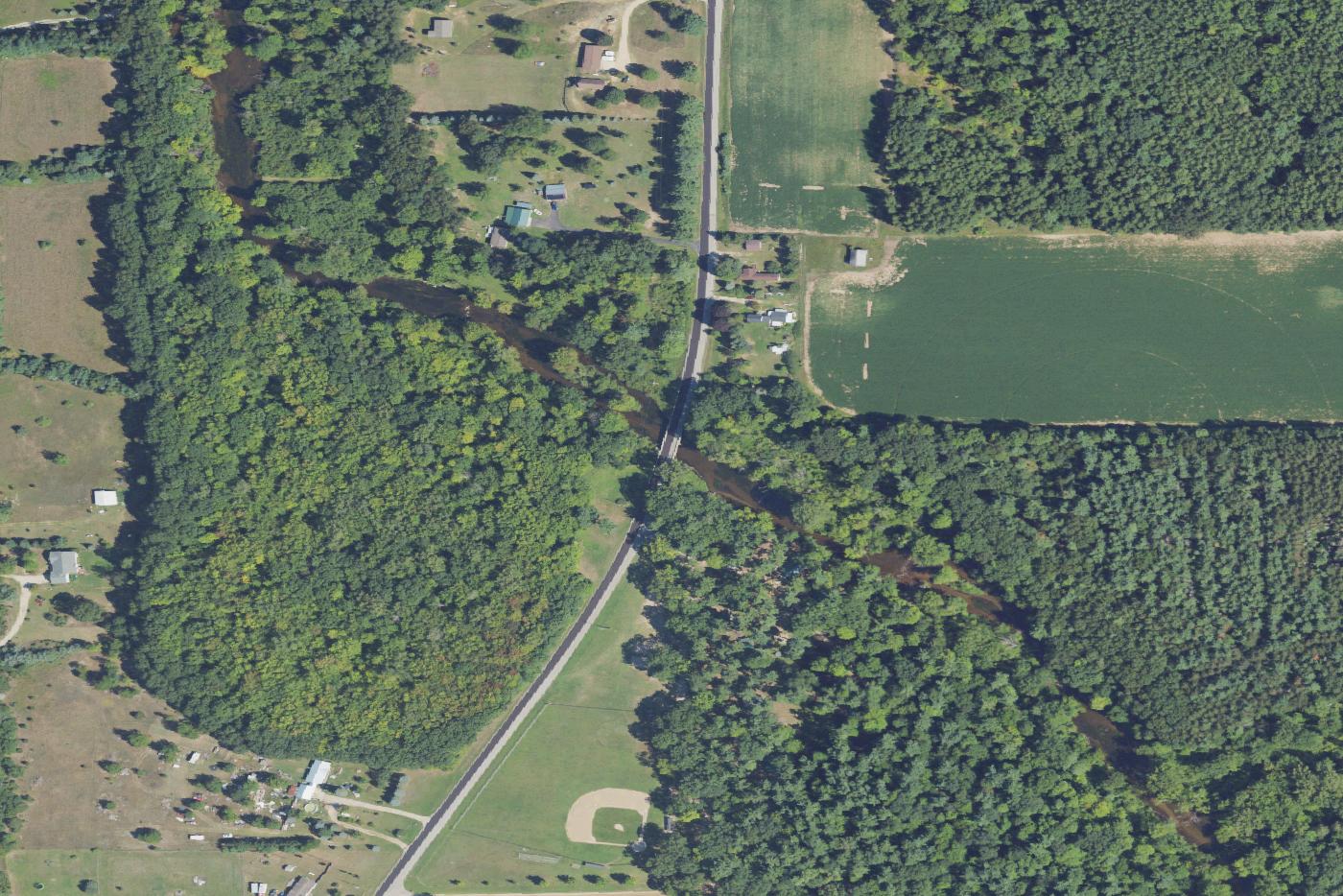
The Pine River at Lumberjack Road, Seville Township. The district’s plan names the Bad, Pine and Maple river watersheds. USDA NAIP aerial imagery via USGS, public domain; cropped.
The district asked for $134,187.04 for a watershed position, a part-time outreach job and matching funds. The board tabled it Oct. 6, rejected it 2–3 on Oct. 20, then approved a version of up to $90,000, 3–2.
Read the full article
GRATIOT COUNTY — The Gratiot County Board of Commissioners voted 3–2 on Oct. 20 to fund the Gratiot Conservation District at up to $90,000 under Resolution 26-467, after a motion for the district’s full request of $134,187.04 did not pass, 2–3, on a recorded roll call. The board had tabled the request on Oct. 6 so a commissioner could “dive into the finances,” according to the county’s Oct. 6 minutes.
What the district asked for
The resolution packet posted on BoardBook would approve an agreement for “performance-based stewardship services at a total cost not to exceed $134,187.04.” The agreement runs from about Oct. 21, 2026 through Sept. 30, 2027, either side may end it on 60 days’ written notice, and the district must deliver quarterly written progress reports to the county administrator. District staff are district employees, not county employees. The agreement refers to an Appendix A describing the services; the posted packet does not include it.
District board chair Kevin Craig described the plan to commissioners (21:53): a sediment-reduction and water-quality project in the Bad River watershed run by a full-time watershed technician or manager, septic-system education, continued scrap-tire collection, a possible hazardous-waste and household-composting program, public outreach including a bus tour, and a pool of money to match grants. He said a full-time position at 40 hours a week and $26 an hour “would be $64,000” with benefits, that adding a part-time person at about $25,000 brought the two positions to “almost $90,000,” and that a $25,000 match request brought the total to about $134,000 (28:20). A county official said the money would have to come from the fund balance (32:18).
The debate
The administrator told the board it could fund all of the plan or one or two of its three parts: land and water stewardship, community waste and blight reduction (the tire collection, household hazardous and electronic waste, and composting), and the public information campaign (33:01). A commissioner said the county should not be funding a position at another organization and asked why the state does not. Craig said the state provides about $3 million statewide for conservation districts. A commissioner said the district had gone roughly 10 years without funding. Commissioner Steve Sopocy, who asked whether a second motion was allowed and proposed funding the full-time position, said the district should have been part of the agricultural millage voters just approved, that it cannot be added now, and that “we have to do something in interim”; he then moved the amendment. Residents who spoke in favor included a farmer who cited about 1,400 tires collected in roughly four hours, and a county Community Development employee, speaking as a resident, who said the district had very little help running the tire events despite their success.
The votes
Roll-call answers below are as called on the recording; the chair’s answer on the first roll call is quiet, and we re-listened to it. The official minutes will be the formal record once approved.
Take the resolution off the table (39:00): moved by Bunting, supported by Bailey; the board proceeded to the resolution.
Adopt at $134,187.04 (40:32): moved by Bunting, supported by Sopocy. Yes: Sopocy, Bunting. No: Gay, Bailey, Owens. Did not pass, 2–3.
Amend and approve at up to $90,000 (42:55): moved by Sopocy, supported by Bunting, to fund “your full-time position” and benefits for the watershed program “as well as the matching funds portion of the grant.” Yes: Sopocy, Bunting, Owens. No: Bailey, Gay. Approved 3–2.
What the record does not show
The posted packet holds the original resolution at $134,187.04 with the vote lines blank, not the amended version. The record does not show whether $90,000 is a not-to-exceed amount in a revised agreement, what happens to the part-time outreach position and the septic and composting work the district described, or what budget amendment accompanies the fund-balance spending. The amounts stated aloud do not add to the $134,187.04 total, and the Appendix A budget that would reconcile them is not posted.
Questions that remain
What is the text of Resolution 26-467 as amended, and the signed agreement?
Which parts of the district’s plan will the $90,000 pay for?
Which fund pays, and what amendment to the budget was prepared?
In his Oct. 20 report the administrator said his contract calls for an evaluation “usually in November.” He said the board could do the performance review Nov. 17, after a meeting he will not attend.
Read the full article
GRATIOT COUNTY — County Administrator Timothy Dolehanty told the Board of Commissioners on Oct. 20 that he will not attend its Nov. 3 meeting, which falls on Election Day, and that a performance evaluation his contract calls for “usually in November” could be held Nov. 17, according to the county’s recording of the meeting.
What he said about the evaluation
In his report (14:01), the administrator said he will not attend the Nov. 3 meeting and called it “kind of an opportune time for me to not be here because in my contract, it says you will do a performance evaluation usually in November.” He said he had asked the deputy administrator to develop the evaluation, that “You’ll get to talk about it without me here, which will maybe reduce some some awkwardness,” and that “we can do the performance review on the 17th as well.” The meeting minutes do not yet record any of this. His contract began Dec. 1, 2025, as described in our Oct. 21 report; this report has not seen the contract’s evaluation clause.
Dates to know
Nov. 3: the board’s next meeting. The administrator said the deputy administrator will be there in his place. The meeting falls on Election Day.
Nov. 17: Michigan Association of Counties executive director Stephan Currie is scheduled for a presentation of about 15 minutes. The administrator said the association tries to visit each county on a three-year cycle. He said the resolution for the tax capture plan for the Pine River Township housing development is the only item he knew of in the queue for that meeting, and that he would keep the agenda light.
The rest of his report
The administrator said he attended an invitation-only local government capacity symposium in Lansing on Oct. 13, hosted by MSU Extension, the University of Michigan’s Ford School of Public Policy and the Citizens Research Council, and toured the Switch data center in Gaines Township on Oct. 19 at the invitation of the Michigan Association of Counties (5:31). He said Gratiot County is unlikely to attract a data center of that size, citing distance from population centers, the county’s electric capacity and the amount of land needed.
What the county’s Oct. 6 minutes say about this publication
The county’s minutes of the Oct. 6 meeting, approved on the Oct. 20 consent calendar, record under the administrator’s report: “GC Whistle Blower.com was asking questions, and Tim is not going to respond unless they identify themselves.” That matches his written reply to our Sept. 17 inquiry. Our questions and his reply are on the Requests for Comment Log.
What the record does not show
The record does not show the contract’s evaluation provision, the criteria the deputy administrator will use, or whether the Nov. 17 meeting will include a closed session. It does not establish any connection between the evaluation timing and any other matter before the board.
Questions that remain
What does the administrator’s contract say about the timing and process of the evaluation?
What evaluation form or criteria will the board use, and who prepares them?
Will the evaluation be held in open or closed session on Nov. 17?
Documents posted for the Oct. 20 meeting show the courts saying monthly reports would take “a large amount of additional work,” four bargaining units in negotiations, a code enforcement position being planned and $35.6 million across county funds.
Read the full article
GRATIOT COUNTY — The packet for the Oct. 20 Board of Commissioners meeting includes an email in which a court official says the county administrator’s request for monthly court reports would take “a large amount of additional work,” a labor update showing four bargaining units in negotiations, and a notice that county employees move to MESSA for benefits on Jan. 1. The documents are posted on BoardBook; the figures below are from them unless noted.
Courts on monthly reports
An Oct. 9 email from Jennifer Wood to the county administrator says that, after speaking with Chief Judge Lisa Sullivan, the courts “like to be good partners with the County funding unit,” but that monthly reports from all of the courts “would require a large amount of additional work.” She wrote that the courts already file quarterly and annual reports with the State Court Administrative Office, linked public statistics for the county, and invited the administrator to say what specific information he wants. The email is posted as the packet’s court reports attachment.
Labor and benefits
The Human Resources report lists the Command Officers Association of Michigan and three Capital City Labor Program units (road patrol and corrections, central dispatch, and bailiffs and security) as in negotiations. The Governmental Employees Labor Council and the Technical, Professional and Officeworkers Association of Michigan agreements are effective through Sept. 30, 2027. County employees will enroll with MESSA for benefits beginning Jan. 1, 2027, with open enrollment starting Nov. 9, 2026. Open positions posted until Oct. 23 include an information technology specialist, a corrections officer and road patrol; central dispatch applicants were being evaluated. The county hired an assistant prosecuting attorney expected to start Oct. 19, and two full-time and one part-time corrections officers. The report also lists sexual harassment training facilitated by the law firm Cohl, Stoker & Toskey and a flu shot clinic on Oct. 15 with 19 staff signed up.
Code enforcement
The Community Development report for September says the townships, county administration and department staff are working on changes to the blight ordinance and program and on a job description for a full-time code enforcement position, following the retirement of current staff. The department issued 16 building permits in September and received 15 applications, which it called low for the time of year.
Information technology
The Information Management report for September counts 152 help-desk tickets and one unplanned outage tied to a firewall changeover that affected seven departments. It says most problems were fixed within a week by the vendor, VC3, “which is slower than is acceptable.” The report says staff are writing a request for proposals for software to replace what VC3 provides, and that an IT support specialist was promoted to a new systems and network administrator position, leaving that position posted until Oct. 23.
Parks and disaster aid
The parks director reports that the overlook at Reed Park was removed as a liability and the beach area enlarged, that splash pad parts have been delivered to the City of Alma, and that camping reservations brought in about $2,745 more than last year. The consent calendar also includes the federal notice for disaster declaration FEMA-4925-DR, issued June 30, 2026 for storms, tornadoes and flooding April 10–21, 2026, which lists Gratiot County among the counties designated for both Individual Assistance and Public Assistance.
Money
A finance staff member presenting the claims said a new cash summary in the packet totals $35,583,863.72 across all county funds, including road commission and delinquent tax money (1:03:55). The check register for Oct. 1–15 totals $3,057,231.85 across all funds; the staff member said about $2.3 million of that was state education tax passed through after summer collections (1:04:28). The invoice register for approval totals $174,947.46. The treasurer’s September investment summary lists $8,372,902.20 in investments with $24,104.81 in interest collected. The treasurer told the board that two properties on the foreclosure re-offer list sold and one remains, to sell at a minimum bid below the taxes owed (1:02:46); the treasurer’s annual foreclosure report, no longer required by the state, was provided anyway.
What the record does not show
The packet does not say whether the county will keep asking the courts for monthly reports, what the bargaining proposals are, or what the MESSA move costs. The check and invoice registers are labeled for a meeting of Oct. 21, one day after the meeting.
Questions that remain
Will the county name the specific information it wants from the courts, as the email invites?
What does the move to MESSA change in cost and coverage for employees and the county?
When will the full-time code enforcement position be posted, and who will fund it?
The airport manager said jet fuel sales were about 6,600 gallons below last year and runway lighting materials are 12 to 14 weeks out. The financial report shows fuel sales of $190,838.58 against a $175,000 budget.
Read the full article
GRATIOT COUNTY — The Gratiot County Airport Authority met Oct. 20 as the commissioners recessed from their regular meeting into it (1:07:11). The airport manager told the authority that jet fuel sales were about 6,600 gallons below last year, that materials for the runway lighting project are 12 to 14 weeks out, and that a state inspection was due the following Tuesday, according to the county’s recording. The airport’s financial report shows fuel sales above budget for the fiscal year that ended Sept. 30.
Fuel
The manager said jet fuel (Jet A) sales were about 6,600 gallons below the same point last year, 100 low-lead (100LL) aviation gasoline was about 2,100 gallons below through the first nine months, and there were 154 fewer fuel transactions (1:07:53). He said crop dusters used less fuel and sprayed fewer acres this year (he mentioned tar spot in corn), and that fuel prices were about $1.50 a gallon higher than a year ago and the latest Jet A delivery would cost more still.
The airport’s Revenue and Expenditure Report for the period ending Sept. 30, 2026 shows fuel sales of $190,838.58 against an amended budget of $175,000 (109.05 percent), and fuel purchases of $128,213.39 against $145,000. It shows contractual services of $159,065.40 against a budget of $80,000. Federal grant revenue budgeted at $328,450 shows $0 recorded; state grant revenue is $101,828.74 against a $51,610 budget. Total revenues are $380,314.47 against a $650,970 budget, and total expenditures are $359,672.90 against $725,500.
Runway lighting
The manager said a contractor from Mount Pleasant was the low bidder to replace the runway 9/27 lights, in an amount he put at about $380,000 to $390,000, “just off top of my head” (1:13:22). The work also moves lighting equipment out of the existing terminal into a separate concrete prefabricated building, with a concrete structure over the conduit. After a pre-construction meeting the previous week, he said, material is 12 to 14 weeks out, “that kind of puts us into January,” with a three-phase plan; the first phase might still happen this year, and winter weather could postpone the rest.
Other items
The manager said crack sealing and the final taxiway markings under a state grant are finished, that a state grant of about $190,000 was paid half in advance with the rest due on completion, that a tractor and mowing equipment remain to be delivered, and that the Sept. 26 fly-in drew 36 airplanes, about 145 people fed and 71 airplane rides for children. The state airport inspection was due the following Tuesday, Oct. 27, and he said some trees near runways 9 and 18 are too tall; the airport has easements, not ownership, on that land, he said, and tree removal is usually done in the fall. He said the deer management program uses state permits for up to 60 antlerless deer; last year it took 77 deer, 58 of them does.
What the record does not show
The manager’s written report on BoardBook is a 10-page file of images whose text is not machine-readable, so the figures above come from his remarks at the meeting. The record does not show the contract amount, the contractor’s name, the cost of the tree work, or why contractual services ran above budget.
Questions that remain
What is the awarded amount and contractor for the runway lighting project, and what is its schedule?
What does the Oct. 27 state inspection find, and what will tree removal cost?
Why did contractual services reach $159,065.40 against an $80,000 budget?
Public records from the three counties where Administrator Timothy Dolehanty held the same job show resignations or contract questions that followed board concerns. In Gratiot, he has said in writing he will not answer questions from anonymous persons.
Read the full article
GRATIOT COUNTY — Gratiot County Administrator Timothy Dolehanty has declined to answer questions from unnamed sources about board meetings and county operations. Public records from the three counties where he previously held the same top administrative job show resignations or contract questions that followed board concerns, a hostile-work-environment allegation, and a personnel discussion that resulted in a separation payment.
Dolehanty began the Gratiot position on December 1, 2025, under a three-year contract approved by a unanimous Board of Commissioners vote after interviews with three finalists. The county’s department-head salary schedule lists the administrator role at Grade 7. He previously served as administrator and controller in Ogemaw County from 2020 to 2025, in Ingham County from 2013 to 2020, and in Isabella County from 2004 to 2013. Earlier positions included Chippewa County controller, Wexford County administrator, and manager for the Charter Township of Caledonia. He holds bachelor’s and master’s degrees from Central Michigan University.
Isabella County, 2004–2013
Dolehanty served nearly nine years. In September 2008 the board delayed renewal of his contract after diversity coordinator Sharon Quinlan resigned. Her three-page resignation letter described the administrator’s office as a hostile work environment. Two commissioners stated they would not vote to renew the contract unless the allegations were investigated. A performance review gave him high marks on financial skills and policy development. It also stated that his leadership style was perceived as characterized by “remoteness and hostility” by some board members and several department heads. Some respondents described him as accessible, supportive, and a “high caliber administrator.” Others said he was “too quick to anger” and at times “intimidating.” One commissioner said he did not provide the budget in a timely fashion and was evasive and not easily accessible. After the delay he later received a new three-year contract. In 2011 the county settled a lawsuit for $15,000 with former animal control director Patti Lentz, who had been fired in 2007. Dolehanty and the board chairman were named in the suit. Most claims were dismissed on governmental immunity. The settlement included a full release of claims against them. He resigned in 2013 to accept the Ingham County position. His resignation letter described the Isabella years as the most rewarding of his career.
Ingham County, 2013–2020
He served as controller and administrator for six years. Public salary data lists his compensation at $151,303.56 in 2018 and $153,372.13 in 2019. In January 2020 he resigned effective January 24 after commissioners raised issues with him. The board chair described it as a personnel matter and said there had been discussions. The county paid him six months’ salary ($76,000), health benefits, and unused vacation and sick time under a separation agreement. During his tenure the board voted to suspend and later fire the animal control director after a Michigan Humane Society investigation and a county controller’s review found problems with the care of dogs held in connection with a dogfighting case. The controller’s report described “deep organizational dysfunction” at the shelter. Investigative reports were referred to law enforcement. A special prosecutor later declined to bring criminal charges, stating the dogs were never deprived of food, water, or veterinary services. Separate 2019 reporting involved allegations of ethical issues in the IT department. Dolehanty said he referred related documents to law enforcement after they surfaced through a FOIA request. The former IT chief later pleaded no contest to a misdemeanor related to the matter.
Ogemaw County, 2020–2025
He served as administrator and controller. Public records show him presenting on jail population management, animal control millage language, and local business support during pandemic restrictions. No public findings of misconduct appear in available reporting from that period. He left for the Gratiot appointment.
Gratiot County, 2025–present
The opening followed the resignation of former Administrator Chris Oosterhoff amid a Michigan State Police investigation into allegations of misappropriated county funds. A forensic audit showed more than $26,000 missing; the matter was referred to the state attorney general. Ryan Wood served as interim administrator. In Gratiot, Dolehanty has identified himself as the board’s official spokesperson and the county’s FOIA coordinator. In September 2026 he stated in writing that he would not respond to questions posed by anonymous persons. That reply followed an inquiry about topics discussed at the September 15 board meeting. A follow-up asking whether department staff may answer questions directly received no reply. In June 2026 he responded publicly to comments at a board meeting about workplace conditions at the county jail, saying the county would take every suggestion of harassment seriously and would follow up with employees one-on-one.
What the record shows and does not show
The public record documents employment across four counties, a contract-renewal delay in Isabella after a hostile-work-environment allegation and mixed comments in a performance review, an animal-control lawsuit settlement in Isabella, a resignation in Ingham accompanied by a separation payment after commissioners raised issues, involvement in animal-control and IT ethics matters in Ingham, and a stated policy in Gratiot of not answering questions from unnamed sources. It does not contain a finding of criminal wrongdoing against Dolehanty or a detailed public explanation of the specific issues raised before the Ingham resignation beyond the personnel characterization given by the board chair. Official contracts, minutes, performance reviews, and separation agreements, where posted, are the formal records.
Questions that remain (and that will be sent)
What specific issues did Ingham County commissioners raise before accepting the 2020 resignation?
What was the outcome of the Isabella County investigation into the 2008 hostile-work-environment allegation?
What are the exact salary, benefits, and severance terms in the current Gratiot contract?
Does Gratiot County have a written policy requiring identification before informal questions about public meetings or posted materials are answered?
Will the county post the full employment contract and any related evaluation materials on BoardBook?
Resolution 26-468 passed on a unanimous roll-call vote Oct. 20. It moves Animal Control from the sheriff’s office to the county administrator and ends officers’ authorization to carry firearms and to respond to law enforcement calls.
Read the full article
GRATIOT COUNTY — The Gratiot County Board of Commissioners voted on October 20, 2026 to reassign animal control and immediately rescind authorization for animal control officers to carry or have access to firearms while on duty.
The meeting was a regularly scheduled Board of Commissioners meeting. The county’s published 2026 meeting schedule lists Tuesday, October 20, 2026 at 4:30 p.m. as a regular meeting (marked with an asterisk for the usual recess into the Airport and Finance committees). The county calendar entry is titled “Gratiot County Board of Commissioners Meeting.” The recording posted the next day is titled “Gratiot County Board of Commissioners Special Meeting 10/20/26.” No separate special-meeting notice appears in the posted materials. The agenda followed the structure of a regular meeting.
The meeting was not livestreamed. The recording was posted to the county YouTube channel the following day: youtu.be/mCIXhoOYlqI. The county’s Virtual Meetings page continues to state that meetings “will be live-streamed and will remain posted after the meeting is finished.”
What the resolution does
Resolution 26-468 passed on a unanimous roll-call vote (Bailey, Bunting, Gay, Sopocy, Owens). It does two things:
Reassigns the animal control agency from the sheriff’s office back to the county administrator’s office, effective immediately.
Directs the administrator to rescind authorization for animal control officers to carry or access firearms on duty and to rescind authorization for them to respond to law enforcement calls in their official capacity.
Administrator Timothy Dolehanty said the change would take effect the next morning. He reported that the county’s liability insurance carrier had added an endorsement of roughly $95,000 annually after reviewing the practice. Animal control officers are not MCOLES-certified law enforcement officers. Their training was described as similar to a concealed-pistol qualification plus sheriff’s range qualification. The officers had also been authorized to self-dispatch and respond to law enforcement calls. The administrator said the underwriters determined the risk exceeded what the existing coverage supported. He noted that directing the sheriff to make the changes would not guarantee compliance, while directing the administrator would.
The sheriff was not present; he was attending a conference in Traverse City.
The March 2025 vote
On March 18, 2025, the same board voted unanimously to place animal control under the sheriff’s office. Sheriff Tom Clark and Animal Control Director Jaime Haase presented the move as a safety and operational improvement that would expand training, access, and the possibility of approved sidearm carriage under sheriff policies. The motion passed on roll call: Sopocy yes, Bailey yes, Bunting yes, Gay yes, Owens yes. That meeting recording is at youtube.com/watch?v=SOp5zBcIC_c. County animal control officer job descriptions have listed the ability to handle and shoot a firearm.
The September 15, 2026 regular meeting included discussion of a request to reclassify animal control officer pay from Grade 2 to Grade 7. No final decision on wages was recorded at that meeting. The October 20 action addressed department placement and equipment authorization, not pay.
Livestreaming and the law
The Open Meetings Act does not require livestreaming. Meetings must remain open to the public, people may attend and record, and minutes must be kept. Not streaming does not break the law. It does remove the real-time remote access the county has been advertising.
What the record shows and does not show
The public record shows the March 2025 vote was presented as a safety measure and the October 2026 vote was presented as a response to an insurance underwriter’s risk and cost determination. It does not establish any other motive. Official minutes will be the formal record once approved. Meeting materials remain on BoardBook.
Questions that remain
Why was the recording titled a special meeting when the county’s published schedule and calendar list it as a regular meeting?
Has the insurance carrier confirmed removal or reduction of the added endorsement?
What is the exact written policy language and effective date for the rescission of firearms and law-enforcement response authorizations?
Will future meetings continue to be livestreamed as the Virtual Meetings page describes?
Corrections and responses are welcome.
Corrections
Oct. 21, 2026: An earlier version of this report, first posted on Facebook, misspelled the surname of Animal Control Director Jaime Haase. A reader pointed it out. Thank you for the feedback. The spelling here follows the county’s Animal Control page.
The meeting that began at 4:30 p.m. was not streamed on the county’s YouTube channel, though its Virtual Meetings page says meetings will be live-streamed. The Open Meetings Act does not require it. The report includes a section labeled as our opinion.
Read the full article
GRATIOT COUNTY — The Oct. 20 Gratiot County Board of Commissioners meeting was not livestreamed.
The meeting that started at 4:30 p.m. on Oct. 20 was not streamed on the county’s YouTube channel. People who attended confirmed it was underway. The county’s Virtual Meetings page still says meetings “will be live-streamed and will remain posted after the meeting is finished.” Recent meetings, including October 6, are marked on the channel as having been live.
The Open Meetings Act does not require livestreaming. Meetings still have to be open to the public, and people can still attend and record. Minutes still have to be kept. Not streaming does not break the law. It does remove the real-time remote access the county has been advertising and providing.
Hopefully a recording may be posted the next day. As of the evening of Oct. 20, that had not happened. It was not clear yet whether residents would get full access through the county’s own channel. People who attended can still share what they recorded. Official minutes will be the formal record once approved. Meeting materials remain available on BoardBook.
Opinion of GC Whistleblower
This is our first official opinion on the decision not to livestream the meeting. We see it as a significant step backward in transparency. The county has been giving residents the ability to watch meetings as they happen without being in the room. That option was not available on Oct. 20. Anyone who could not get to the courthouse lost the convenience the county itself has described as its practice.
The timing also raises questions. The county has declined to answer questions from this outlet on the grounds of anonymity. Stopping a livestream for a regular meeting, after publicly stating meetings would be streamed, is one way to limit remote observation. It is fair to ask whether the decision was meant, at least in part, to reduce outside scrutiny or to make in-person attendance the only practical way to see what was happening in real time.
That is our assessment, not a proven fact. It is based on the practice the county has documented, the language still on its website, and the lack of any public explanation so far. The public record does not establish motive. It does establish that a form of access the county had been offering was not provided for this meeting.
Volunteer public representatives
As of Oct. 20, we were looking for 4 more Gratiot County residents to serve as volunteer public representatives. One person had already applied and was in the process. We will not announce any volunteers publicly until we have all 5.
Volunteers contact public offices, ask questions, and file records requests under their own names. We stay anonymous because officials have declined to answer questions from an unnamed source. Volunteers introduce themselves each time as representing GC Whistleblower. They can add up to five of their own related questions per assignment. They do not write articles. We share how answers are used before publication and take volunteer feedback into account.
Details and the application form are on the volunteer page.
Questions that remain on the meeting
Would a recording of the October 20 meeting be posted to the county YouTube channel? (Answered Oct. 21: it was; see the update above.)
Does the county still plan to livestream future meetings the way its Virtual Meetings page describes?
If the practice has changed, when was that decided and why was no notice given?
We will update as more information comes in. Corrections and responses are welcome.
A publisher’s account and explainer: how we got here, what happened when we asked county offices questions, what we found when we searched for a rule about who may speak to the press, and what we are changing.
Read the full article
GRATIOT COUNTY — This is an account by the people behind this publication, labeled as such: part explanation, part record of what we have done and found, written to be checked. Where it states a fact, it names the document.
Why we started
We are residents of this county. We live with the results of what local government decides: the tax bill, the road, the school bond, the budget. Every one of us has asked at some point where our tax money is going. The information is out there, but it is spread across the county site, city sites, school sites and state databases, and buried in packets of 100 pages or more, written for people who already know what they are looking for. Most people work and raise families and do not have the time. So we started reading the documents and putting them next to each claim, so no one has to take our word for it.
What we have attempted
We read agendas, audits, budgets, minutes and contracts and publish what they say, with the document linked.
We asked questions. On Sept. 17 we emailed a county department. The director forwarded the email to the county administrator, who serves as the Board’s spokesperson, and he replied: “I will not respond to questions posed from anonymous persons.” We sent one follow-up asking whether department staff may answer us directly or whether everything must go through his office. As of Oct. 3 there has been no reply. Both emails are published in full. We have reached out to more than one office and asked more than one question.
On Oct. 2 we sent questions to the City of St. Louis, federal energy regulators and the Michigan Public Power Agency, asking for answers by Oct. 9.
We post every request we send, word for word, on a public log.
What we found does not work
Asking as an anonymous publisher. Some offices say they will not answer, and a records request under Michigan’s Freedom of Information Act must carry the requester’s name and address (MCL 15.233). Public comment at county board meetings also asks speakers to identify themselves under the Board’s Rules of Organization (section 5.8.4(a) of the April 2026 amended Rules).
Routing everything through one spokesperson. We went looking for the rule. We searched the county’s Rules of Organization, its policy manual, its posted personnel documents and job descriptions, and board minutes and packets back to 2020. We found no document that says reporters or residents must go through the county administrator to reach a department. What we did find:
The Rules of Organization name the Board Chairperson as spokesperson “for Board of Commissioner action,” or someone the Chairperson designates in writing (section 2.1; unchanged in the Jan. 6 and Apr. 21, 2026 versions).
A 2013 Board policy (Policy 114, Media Communications Officer Policy) also names the Chairperson and says it is “not intended to limit or replace the media interactions” of other elected officials or of county department heads “in their normal course of business.” The same policy says that when someone other than the Chairperson receives a media request specific to the opinion, action or intent of the Board, they should refer it to the Chairperson. We could not confirm whether the 2013 policy is still in force; it is not in the county’s online policy manual.
The county administrator is the county’s Freedom of Information Act coordinator, which covers records requests, not questions.
We did not find a written designation of the administrator as spokesperson. We could not search anything not posted, such as an internal or oral directive, and we are asking the county to show us anything we missed. The request will be posted on our log.
Relying on documents alone. Documents tell you what was decided. They rarely tell you why.
What a single spokesperson gains and costs
There is a real case for one voice: the information is consistent, misquotes are less likely, a lawyer can review it first, and one person can be held accountable for it. The cost falls on readers: when only one person speaks, no one can check what he says against anyone else. For a publisher, that is the difference between reporting and repeating, and it limits what we can verify, which affects our reporting, our articles and our reputation.
What the law does and does not say
Officials are not required to answer a publisher’s questions, and we are not claiming anyone broke a law. Michigan’s Freedom of Information Act covers records, not questions. A records request, from a named person, must be answered within set deadlines. That is why the next step, when questions go unanswered, is a formal public records request, which we will publish.
A question for county officials
Do other news outlets, such as the Gratiot County Herald or the Morning Sun, reach department heads directly, or do they also go through the spokesperson? If they reach them directly, we would like to understand what is different about us, because we are asking the same kinds of questions. If the same rule applies to everyone, we would like to know that too.
We are a newer publication, and we understand that the name “Whistleblower” can sound as if we are someone on the inside. In the words of one of the people behind this page:
“As one of the main individuals behind Gratiot County Whistleblower, and the one who wrote this post, I can transparently say that none of these public officials know me directly, and I am not a part of the government.”
We would welcome a direct reply from any office, and we will publish it.
What we found is working
The documents. Every claim links the record.
Our public log. Every request, with the date, who it went to, and what came back, including silence.
Corrections in public. This week we fixed a ballot story we got wrong and removed private residents’ names from two reports. All of it is on our corrections page.
Neighbors. People write in with questions and things they have noticed, and some want to dig in themselves.
A meetings page, so you can see what is happening this week and how to speak.
What transparency means to us
This is our view, and we would like yours. Posting a document is not the same as being transparent. Full transparency means the numbers behind the numbers: the completed dollar amounts, the invoices paid out of taxpayers’ pockets, what was voted and why. It means public officials who are willing to talk to the press and answer the hard questions residents have. We hold ourselves to that first: we publish every question we ask and every answer we get.
Where we are headed
Named neighbors behind our questions. Our public representatives send them under their own names. Every answer goes on the log.
Formal public records requests when questions go unanswered. We will publish every one.
“Where does the money go?” A series following the county’s dollars: budgets, audits, drains, bonds and millages.
A weekly newspaper and meetings tracker.
More coverage of what few cover: townships, school boards, the road commission, drains and courts.
We are anonymous. That is legal, other counties have independent publishers like us, and most people could not name the owner of the paper they read. We publish our reasons and the trade-off. What counts is whether the facts hold up.
Tell us what you think
We would rather hear it than guess. Write to contactus@gcwhistleblower.com or use the Ask the Whistleblower form: What do you think our intentions are? What are we doing right? What could we do better? Do you care whether we are anonymous, or is that mostly a concern for public officials? What is one question about the county’s money you wish someone would answer?
What this report does not establish
It does not establish why any office has not answered, whether any internal directive exists, or whether the 2013 media policy is current. It does not say any law was broken or that anyone acted with any motive.
The county board meets at 4:30 p.m. and the St. Louis City Council at 6:00 p.m. Both agendas are posted and both set aside time for public comment. One closed-session item is on the county agenda; the rest of that meeting is open.
Read the full article
GRATIOT COUNTY — Residents have two chances on Tuesday, Oct. 6, to ask questions of local officials in person. The Gratiot County Board of Commissioners meets at 4:30 p.m. at the courthouse in Ithaca, and the St. Louis City Council meets at 6:00 p.m. at City Hall. Both bodies have posted their agendas, and both agendas include public comment.
County board: 4:30 p.m., Gratiot County Courthouse
The county lists the Oct. 6 meeting as a “Regular Full Board Meeting” at the Gratiot County Courthouse, 214 E. Center St., Ithaca. The agenda was posted Oct. 1. It sets aside “brief public comment on agenda items” near the start, and “additional public comment” near the end. A note on the agenda says each period is limited to one 3-minute comment.
Business on the agenda includes the 2026 apportionment report (Resolution 26-463), a $128,740 Commission on Aging parking lot proposal (26-464), a loan agreement for Drain No. 050 (26-465), agreements with MSU Extension, the Conservation District and a clinical-services provider (26-466, 26-467, 26-469), a grant agreement (26-468) and the claims for the period. This publication has reported on the apportionment report, the Drain No. 050 loan and the agreements with blank dollar amounts.
The closed-session item
The last item on the agenda reads: “Consideration to enter into closed session to consider Strategy connected with the negotiation of a collective bargaining agreement (MCL 15.268(c)).” That is a proposal to go into closed session for one stated purpose, after the public portions of the meeting. It is not a private meeting. Michigan’s Open Meetings Act lets a public body meet in closed session only for reasons listed in the law, and collective-bargaining strategy is one of them. The board’s vote on whether to go into closed session is taken in the open and recorded in the minutes. Whether the board goes into closed session will be decided at the meeting; the county’s meeting list shows no other special or closed meeting posted.
St. Louis City Council: 6:00 p.m., City Hall
The council’s Oct. 6 agenda lists 6:00 p.m., the time of its Sept. 15 meeting, which was held in the City Hall Council Chambers. It opens with a public hearing on establishing an Obsolete Property Rehabilitation district, with public comments. “Audience Recognition” follows the approval of minutes, claims and board minutes. The agenda states that “each person will be allowed to speak for up to five (5) minutes,” and that the mayor may reduce that to three minutes if many people speak. “Public Comments” appears again near the end of the meeting.
The council’s business includes a cemetery expansion proposal, a petition to abandon part of Drain #199, the bid to demolish 117 S. East Street, and a lift station on North Union Street, all of which this publication has reported on: the cemetery proposal, the lift station and the demolition bid.
New in the packet: the hydro-generator motors
Item 11.B is a “Quote for Reconditioning of Hydro Generators-York Repair.” The agenda statement says that “early in the spring of 2026 we found the exciter motor for Hydro generator #6 was producing low voltage, thus rendering Hydro #6 inoperable.” It says another exciter motor, removed from Hydro #5 “several years ago as it was not functioning properly,” was never repaired. The city sent both DC motors to York Repair in Bay City, which quoted $5,992 and $7,590 to recondition them, $13,582 in all. The statement adds: “Hydro #6 is completely inoperable currently. Repairing both motors will put Hydro #6 back in operation and provide a spare.” It lists the item as not budgeted and needing no budget amendment, and says a contractor who was consulted did not have a direct replacement.
The statement does not say whether Hydro #5 is operating, how long Hydro #6 has been down beyond “spring,” or what other work the units need. Our report on the plant’s output covers the federal figures and the statements of the city’s engineer and the Federal Energy Regulatory Commission.
Questions the record leaves open
These come from gaps in the public documents. They are not accusations, and officials may have answers.
County: What will the Conservation District and clinical-services agreements cost, and what services do they cover? Where is Drain No. 050, and how is the loan to be repaid? What is the status of the Animal Control staffing and pay changes discussed on Sept. 15, and may county departments answer questions from the press directly? (Our closed report and earlier report on the pay request have the background.)
City: What does it cost, in total and per year, to keep the hydro units and dam in service, and does the new electric rate include any of it? When is Hydro #5 expected to run? What happens to the cemetery proposal if the 2026 survey differs from the 1999 plan?
What the record does not say
The county agenda does not state the scope of the additional public comment period. The city packet does not say where the council will take public comment on the hydro item specifically. Neither the agendas nor this report can say what will be decided; the votes happen at the meetings. This report will be followed by reports on what was decided.
Annual net hydro generation at the St. Louis dam, 2002–2024, as reported to the U.S. Energy Information Administration. Chart by Gratiot County Whistleblower.
Federal data list the dam’s yearly hydro generation from 2002 to 2024. A 2001 license order gave an engineering estimate, and two recent documents describe the current status.
Read the full article
ST. LOUIS — The City of St. Louis owns a hydroelectric dam on the Pine River that the Federal Energy Regulatory Commission (FERC) licensed on Nov. 29, 2001, for 40 years. This report sets out what three kinds of federal and engineering records say about the plant’s electricity output, and what they leave unanswered. It states each figure with its source and draws no conclusion from them.
Reported output, 2002–2024
The U.S. Energy Information Administration (EIA) publishes annual net generation for the St. Louis plant (plant code 1852). Its hydro figures, in megawatt-hours (MWh), are shown in the chart above. By year: 2002, 37; 2003, 2; 2004, 274; 2005, 324; 2006, 856; 2007, 506; 2008, 497; 2009, 684; 2010, 796; 2011, 850; 2012, 712; 2013, 661; 2014, 652; 2015, 727; 2016, 783; 2017, 852; 2018, 1,040; 2019, 1,007; 2020, 716; 2021, 425; 2022, 452; 2023, 167; and 2024, 22. The highest year in the series is 2018. EIA’s monthly hydro series for the plant shows zero generation from May 2023 on, apart from 9 MWh in January 2024 and 13 MWh in February 2024.
The plant also has diesel and gas engines. Their output is not included here. EIA’s July 2026 generator inventory lists two hydro units, Nos. 5 and 6, at 0.2 megawatts each, both with the status “Operating.”
Sources: EIA electricity data, facility-fuel series for plant code 1852, annual net generation, hydro, 2002–2024, retrieved Oct. 1, 2026; EIA monthly series for the same plant, 2017–2024; EIA-860M generator inventory, July 2026.
FERC’s 2001 estimate
When it issued the license (97 FERC ¶ 62,184, Project No. 11428), the commission said the purpose of its economic analysis “is to provide a general estimate” of a project’s potential power benefits and costs. In that analysis FERC staff wrote that the Municipal Dam Project “would produce about 1,590,000 kWh annually.” That equals 1,590 MWh, the unit EIA uses. The order presents this as the commission staff’s estimate, made in 2001 dollars with the regional cost of alternative power, and not as a figure the city promised or guaranteed.
Source: FERC, Order Issuing Original License (Minor Project), City of St. Louis, Michigan, Project No. 11428, Nov. 29, 2001 (accession 20011129-3022), p. 8.
Current status, in the documents’ own words
NTH Consultants, the city’s engineering firm, wrote to the city’s director of public services on Oct. 27, 2025: “At this time the generators are not functioning and the dam is not generating electricity.” In a May 28, 2026 proposal to the city, NTH wrote: “Currently, the generators are not functioning, and the dam is not generating electricity.” Both letters were included in city council packets.
FERC’s Chicago Regional Office wrote to the city on Sept. 18, 2026, about the city’s 2025 Dam Safety Surveillance and Monitoring Report: “Also noted was that Hydro #6 is down for repairs due to a faulty exciter.” The letter asks the city to notify FERC “when this unit is back online, or if it will be down for an extended period of time.”
The two documents describe the plant differently: NTH refers to “the generators,” and FERC names one unit, Hydro #6. The documents do not say whether Hydro #5 is operating.
Sources: NTH Consultants proposal to the City of St. Louis, Oct. 27, 2025 (in the Nov. 4, 2025 council packet, p. 65); NTH proposal No. 25003130-20, May 28, 2026 (in the July 21, 2026 council packet, p. 127); FERC letter, Sept. 18, 2026, Project No. 11428 (accession 20260918-3076), p. 1.
What the records do not say
Why output changed. None of the documents above gives a reason for the year-to-year changes in reported generation. The FERC letter gives a reason only for Hydro #6, a faulty exciter, and says nothing about earlier years.
What a repair would cost. The documents give no repair estimate for either generator, and no date when the units are expected to return to service.
Who paid for early construction. The records reviewed for this report do not state who paid to build the dam or the hydro units, or what those projects cost.
How the estimate compares with actual operations. The FERC figure and the EIA figures were produced by different agencies for different purposes. This report does not compare them.
This is part one. A second report will follow. We are asking the City of St. Louis and other agencies for comment and records on the questions above, and we will keep seeking answers from the relevant departments. The City of St. Louis is welcome to respond at contactus@gcwhistleblower.com, and any response will be published in full.
A survey found the unbuilt cemetery land does not match the 1999 layout. On Tuesday the council is asked to raise two engineering fees and to petition the county to abandon part of an old drain.
Read the full article
ST. LOUIS — The St. Louis City Council’s Tuesday, Oct. 6 agenda includes two linked items about expanding the city cemetery: a revised fee from Spicer Group, the city’s engineering consultant (item 11A), and a petition to the Gratiot County Drain Commissioner to abandon part of a county drain that crosses the site (item 11J, Resolution 2026-22). Both are in the council’s posted packet. Neither has been voted on, and the figures below come from the packet.
The fee change
According to the agenda statement from the city’s director of public services, the council approved two phases of Spicer’s June 2 proposal: a survey for $6,900 and preliminary design for $12,000. The statement says the new survey found that existing ground conditions “do not match” those used for the original 1999 plan, which it says implies that the area had been mass graded but not left in a condition that would allow the original plan to be built as designed. Spicer’s Aug. 28 letter agreement therefore asks for $18,000 for preliminary design (up $6,000) and $8,000 for final design, which the statement says was $5,000 in the June proposal. Both are estimates billed at standard hourly rates. With the survey, the three phases would total $32,900, compared with $23,900 under the June figures. Reimbursable expenses, such as permit fees, carry a 10 percent processing fee.
The letter says Spicer’s earlier design covered phase one of the cemetery, built and surveyed as-built in 2005, and that the new work would produce updated design drawings and cost estimates for the rest. Plans would cover interior roads, grading, plot layout, stormwater and water-service extensions. The letter assumes all stormwater drains to the existing system, as the original design did, and says the offer is valid for 60 days.
The drain petition
The agenda statement for item 11J says the city must abandon the part of County Drain #199 that crosses the expansion area so that designers can redirect storm drainage, which would become city storm sewers, and use the easement reserved for the drain. The draft petition describes 695 feet of the drain, running from Eden and Olney streets to the point where it ends under a September 1906 order, and says that portion “has ceased to be of public utility.” It is filed under Chapter 17 of the Drain Code (Public Act 40 of 1956). The statement lists the item as budgeted, with no amendment needed. A petition does not itself abandon the drain; the Drain Commissioner’s process follows.
What the packet does not say
The statement for item 11A leaves its budget and account-code lines blank. The packet gives no estimate of construction cost, no timeline or number of new plots, and no source of funds for building the expansion. It does not say how many hours the fees assume, because they are hourly estimates rather than fixed prices. It does not say what the county’s timing would be for the drain petition. The City of St. Louis, Spicer Group and the Gratiot County Drain Commissioner’s office have not been asked to comment for this report. Any of them is welcome to respond at contactus@gcwhistleblower.com, and any response will be published in full.
Tuesday’s council packet pairs a small planning fee with engineer estimates of $3.75 million for a new lift station and $3.275 million for rebuilding North Union Street.
Read the full article
ST. LOUIS — On Tuesday, Oct. 6, the St. Louis City Council is asked to approve $32,570 to OHM Advisors for “Project Supplement No. 25, Phase I – Planning” (item 11F). The money would pay for a notice of intent and application work to learn whether a new sanitary sewer pump station near North Union and Gratiot streets could qualify for a USDA Rural Development loan. The vote has not yet taken place.
What the city says it needs
The agenda statement from the director of public services says sewage from north of the Pine River now travels through an old sewer in North Union Street to the Union Street pump station near the athletic field, which handles most of the city’s flow. Because of “the prohibitive cost to upgrade this pump station and the river crossings,” it says, the city has had to reject earlier state loan offers. A new station on public works property would take about 30 percent of the flow off the existing one, which the statement says could prolong that station’s life and let future improvements be designed for a smaller capacity. The item is listed as not budgeted, paid from the sewer enterprise fund, with no budget amendment needed.
The estimates behind it
A June 2026 OHM memo in the same packet gives two separate cost opinions. Rebuilding N. Union Street from I&K Street to River Court, about 1,800 feet, with new storm and sanitary sewers and north-block water main, is put at $3,275,000. The lift station, a 2.0 million gallon-a-day station with a 600-foot force main to the treatment plant, carries a $3,750,000 engineer’s opinion: probable construction of $2,820,000 (range $2,400,000 to $4,230,000) plus $930,000 for engineering and related costs. The memo says larger pumps would still be needed at the Union Street station and that their cost is not in the estimate. It also says typical USDA loans run 40 years at 4 percent, with listed April–June 2026 rates of 2.875, 3.75 and 4.75 percent depending on a community’s category.
The larger fee behind the $32,570
The attached OHM supplement shows the $32,570 as one line of a longer scope. It lists $12,000 for a state historic-preservation clearance subconsultant and $20,570 for OHM’s application work, followed by design fees of $198,364 for the street contract and $132,800 for the lift station, for a total planning and design fee of $363,734. Only the $32,570 is in the motion. The supplement says early talks with the Michigan Department of Environment, Great Lakes, and Energy are important because it is unclear how a new station could be permitted without raising the treatment plant’s 5.0 million-gallon peak design flow.
What the record does not say
The packet does not say whether USDA would offer a loan, what rate or term the city would get, or how sewer customers’ rates would be affected. It does not say whether the street and lift-station projects would be built together or when. The city, OHM Advisors and the Department of Environment, Great Lakes, and Energy have not been asked to comment for this report. Any of them is welcome to respond at contactus@gcwhistleblower.com, and any response will be published in full.
Six contractors bid on the street reconstruction. The low bid was $3,596,606 against an estimate of $4,727,895, and the recommended award depends on two conditions.
Read the full article
ITHACA — Bids for the City of Ithaca’s Union Street reconstruction were opened Aug. 25, 2026, and the low bid was $3,596,606 from Malley Construction, Inc., according to the engineer’s recommendation letter in the Sept. 1 City Council packet. The engineer’s estimate was $4,727,895, so the low bid was $1,131,289, or 23.92 percent, below it. The council’s Sept. 1 agenda listed “Award of Bid: Union Street Reconstruction” as new business.
The six bids
The bid comparison, prepared by ROWE Professional Services Company, lists: Malley Construction, $3,596,606.00; Zito Construction, $4,236,611.50 (10.39 percent under the estimate); Crawford Contracting, $5,162,106.62; The Isabella Corporation, $5,168,946.70; Champagne & Marx Excavating, $5,583,710.66; and E.T. MacKenzie Company, $5,783,059.25 (22.31 percent over the estimate). The second-lowest bid was $640,005.50 above the low one. The city manager’s Sept. 1 written report said six companies bid and that one was a “clear leader” vetted by the engineers.
The conditions on the recommendation
The ROWE letter, dated Aug. 26, says the firm has worked on similar projects with the low bidder and checked two of its references. It recommends awarding the contract at the full bid “contingent on” two things: approval by the Michigan Department of Transportation of Transportation Economic Development Fund Category B compliance, and the closing of the bond sale tied to the project. This publication has reported on the bond plan, a single $4 million Capital Improvement Bond, which the Sept. 15 packet described as planned and which was scheduled for a Sept. 18 special meeting.
What the record does not say
The first sentence of the letter says three bids were read, while its table and the city manager’s report show six; the packet does not explain the difference. The packets reviewed do not include adopted minutes showing whether the council voted on the award Sept. 1, and the outcome of the bond sale and of MDOT’s review is not posted. The packet does not give a construction start date or the project’s scope beyond the title, and it does not show how the $4 million bond relates to the $3.6 million bid, such as engineering, financing and other costs. The City of Ithaca, ROWE Professional Services and Malley Construction have not been asked to comment for this report. Any of them is welcome to respond at contactus@gcwhistleblower.com, and any response will be published in full.
The 2026 Gratiot County Apportionment Report, page 3 of the attachment to Resolution 26-463 on the Oct. 6 agenda. Gratiot County public record; cropped.
Commissioners are scheduled to approve the annual report Tuesday. It lists every millage the county’s townships, cities, schools and authorities will levy this year.
Read the full article
ITHACA — The Gratiot County Board of Commissioners is scheduled on Tuesday, Oct. 6, to approve the 2026 Report of Taxes to be Apportioned (Resolution 26-463). State law requires the board to do this each October, and the resolution says its action “will be the official authorization for taxing authorities within the County to levy property taxes for 2026.” The resolution and its eight-page report are attachments to the board’s Oct. 6 agenda. The vote has not yet taken place, and the figures below are the report’s estimates.
The county’s share
The report puts Gratiot County’s 2026 taxable value at $2,015,015,615. On that base the county’s allocated rate of 5.5206 mills is estimated to raise $11,124,095.23, and its voter-approved extra operating rate of 2.8716 mills $5,786,318.84, for a total of $16,910,414.07. The county debt rate is 0.0000. The two rates add up to 8.3922 mills, the same levy this publication reported when the board adopted its 2027 budget. The report also lists the 6-mill State Education Tax on $1,576,035,715 of taxable value, an estimated $9,456,214.29.
Townships and cities
The report lists estimated local tax dollars for 16 townships, three cities and three villages. Among the cities, Alma is at $4,188,679.72 on a charter rate of 13.8410 mills, Ithaca at $1,447,532.23 and St. Louis at $911,702.28. Among the townships, Wheeler’s estimated total, $655,809.38, is the largest, with an extra-voted operating rate of 3.9703 mills. Ithaca’s figure includes a 2.2500-mill debt rate, and a separate table lists a 2.2500-mill combined fire, police and EMS special assessment for St. Louis.
Authorities, colleges and schools
Four authorities appear with their own rates: the Gratiot Emergency Services Authority at 1.5000 mills on $780,576,324 of taxable value (an estimated $1,170,864.49); the St. Louis, Ithaca, Pine River Transit Authority at 0.8000 mills (an estimated $258,111.45); the Ashley Area Fire Authority at 1.5000 mills ($222,657.90); and the Alma downtown development authority ($26,592.81). The Gratiot-Isabella Regional Education Service District is estimated at $10,142,410.01, including $9,652,366.77 from a 5.2000-mill extra-voted operating rate. Montcalm Community College is listed at 2.5987 mills for the part of the county in its district.
School districts are shown at the non-homestead operating rate, generally 18 mills, plus debt and sinking-fund rates. Alma Public Schools has the largest estimated total in the table, $6,559,244.52, including a 7.0000-mill debt rate; Ithaca Public Schools is listed at $2,938,973.20 with a 2.0000-mill debt rate and St. Louis Public Schools at $2,870,161.78. A final page gives each township and city a total homestead and non-homestead rate for every school district that overlaps it.
What is not in the packet
The attachment does not say how the 2026 taxable value compares with last year’s or whether any levy was reduced under the Headlee rollback. Those figures would come from the equalization department’s report and the clerk’s certified rates. Taxpayers can check their own bill against the page that lists their township or city and school district. Gratiot County’s Equalization Department has not been asked to comment on this report; it is welcome to respond at contactus@gcwhistleblower.com, and any response will be published in full.
The Oct. 6 agenda carries a loan agreement between the county and a drainage district. Its exhibit leaves three funding lines blank, and its payment estimate differs from a standard loan calculation.
Read the full article
ITHACA — Gratiot County is scheduled to lend up to $203,683.02 to the Gratiot County Drain #050 Drainage District. Resolution 26-465, an attachment to the Oct. 6 board agenda, would approve an internal financing agreement under the Michigan Drain Code (MCL 280.434). The vote has not yet taken place.
The terms
According to the draft agreement, dated Oct. 1, 2026:
The principal is not to exceed $203,683.02, and the county is not obligated to advance more without an amendment.
Interest is a fixed 4.25% a year, accruing from the date money is advanced.
The term is 15 years, with a final maturity of June 15, 2041, and 15 annual installments beginning June 15, 2027.
Repayment comes from funds legally available to the drainage district: assessments, municipal apportionments, grants or reimbursements, and project revenues. The district may prepay without penalty.
The money may be used only for Drain #050 costs, including construction, engineering, legal and right-of-way, and each advance is to be backed by invoices or similar documents.
The numbers that do not yet line up
The agreement says the average annual installment is “approximately $18,025.” A standard level-payment calculation on $203,683.02 at 4.25% over 15 years gives about $18,641 a year. The difference is about $600 a year. The agreement says the final payment will be adjusted and that a final amortization schedule will be attached as Exhibit A once the actual advance date is known; the Exhibit A in the packet is a summary without a schedule. The amount the district would actually owe depends on how much is advanced and when.
Exhibit B lists an estimated project cost of $252,231.69, made up of the county’s $203,683.02 and $48,548.67 of “pre-payment funding.” The lines for state or grant funding, municipal apportionments and drain assessments are blank. The packet therefore does not show who will ultimately pay the assessments behind the loan.
What the packet does not say
Neither the resolution nor the agreement says where Drain #050 is, what work the project involves, who is assessed, or what fund the county’s advance comes from; the agreement says only “funds legally available to the County.” The signature blocks for both parties are blank, and the agreement does not take effect until all required approvals are obtained, including the drainage district’s own. The county drain commissioner’s office is listed as the district’s notice address. Gratiot County and the Drain Commissioner’s office have not been asked to comment for this report. Either is welcome to respond at contactus@gcwhistleblower.com, and any response will be published in full.
Resolution 26-469, page 1 of the attachment on the Oct. 6 board agenda; the highlighted blank is in the original. Gratiot County public record; cropped.
Among seven new-business items for Oct. 6, a $176,202 extension contract is complete. Resolutions for the Conservation District and for court clinical services are not.
Read the full article
ITHACA — The Gratiot County Board of Commissioners posted its Oct. 6 agenda with seven resolutions under new business. Three of them authorize agreements with outside organizations, and they are in different states of completion. None has been voted on yet, and drafts can be filled in before a meeting.
Extension services: a number and no contract
Resolution 26-466 would approve an agreement with Michigan State University Extension for fiscal year 2027 “at a total cost not to exceed $176,202.00.” The resolution says county voters approved an extra-voted millage for Extension services. It refers to “the attached Agreement for Extension Services,” but the attachment posted with the agenda is the two-page resolution alone; the agreement itself is not in it.
Conservation District: services and price both blank
Resolution 26-467 concerns the Gratiot Conservation District. It says the district’s staff and funding limits cause it to “pass up valuable state and federal funding,” and that its long-range plan matches the county master plan on water remediation and safety, agricultural resilience and blight mitigation. The operative paragraphs read: the board “wishes to engage the Gratiot Conservation District to provide _____ services,” and “authorizes development of an agreement with Gratiot Conservation District for _____ services at a total cost not to exceed $_______.” The resolution also requires quarterly activity reports to the board.
Resolution 26-469 says the 65B District Court “relies on clinical service providers to evaluate persons who appear before the Court” and that Brain and Behavioral Health of Traverse City “has demonstrated an ability to reliably provide clinic services to the satisfaction of the Court.” It would authorize development of an agreement for clinical services “at a total cost not to exceed $_______,” with reports as the court requests. The packet does not say what services are covered, how the provider was selected, whether other providers were considered, or what the court paid in the past.
Why it matters
Other items on the same agenda carry full dollar figures, such as $128,740 for the Commission on Aging parking lot (Resolution 26-464, which this publication reported when bids were requested) and $203,683.02 for the Drain No. 050 loan. Where the amount is blank, the public cannot see the board’s spending limit before the meeting. The board’s Purchasing Policy, cited in the parking-lot resolution, sets competitive-bid steps for larger purchases; whether it applies to these agreements is not stated. The county may supply the missing figures at or before Tuesday’s meeting, and the minutes will show what was adopted. Gratiot County, the Conservation District and Brain and Behavioral Health have not been asked to comment for this report. Either is welcome to respond at contactus@gcwhistleblower.com, and any response will be published in full.
Commissioners hired an accounting firm in February after finding the county “lacked detailed, written internal control procedures.” Three checks later, the findings have not been placed in the public record.
Read the full article
ITHACA — On Feb. 17, 2026, the Gratiot County Board of Commissioners voted to hire the accounting firm Maner Costerisan to audit the county’s internal financial controls and accounting practices, at a cost not to exceed $40,000. The resolution says why: “leadership changes in the past year led to a fresh review of internal financial controls and accounting practices,” and “it was determined that the County lacked detailed, written internal control procedures to guide accounting practices.”
The stated purpose of the special audit is “to ensure that operating procedures including all internal controls and accounting practices are being followed and that all expenditures of County funds are made in accordance with laws, regulations, and County policy.”
What the record shows
The county administrator issued a request for proposals (Project No. 01-26) and received 12 proposals that met the qualifications, according to Resolution 26-368. The board chose Maner Costerisan as “the most responsive and responsible proposal.” The vote was 5-0 on a motion by Commissioner Sopocy, seconded by Commissioner Bunting.
The county’s check registers, which began appearing in board packets in March, show three payments to the firm under the general-fund line for the Board of Commissioners:
$8,000, dated May 7, 2026, described as “2026 consulting progress — internal controls.”
$15,000, dated June 25, 2026, described as a “consulting service progress bill.”
$5,000, dated Aug. 27, 2026, described as “consulting services — final bill.”
That is $28,000 of the $40,000 authorized, and the last payment is labeled final.
The presentation
The minutes of the board’s July 21 meeting list, as the first item of new business, “Maner Costerisan, Internal controls review project — Bethany Verbel.” The minutes record no discussion, no document received and no action on the item. The same item appeared on the Aug. 4 agenda. The minutes of Aug. 4, approved by the board on Aug. 18, do not mention it.
No report, letter, finding or recommendation from the firm appears in any board packet from February through Sept. 15, 2026. This publication reviewed every regular-meeting packet posted for that period.
Policies adopted in the same months
While the audit was under way, the board adopted a run of written financial policies. On March 17 it approved policies on business travel and reimbursement, driver authorization, general financial practice, claims processing, health-information privacy and the sale of county property (Resolutions 26-387 through 26-391 and 26-393). On April 21 it approved budget procedures, budget transfers, enhanced access to public records and Freedom of Information Act policies, and repealed obsolete policies (Resolutions 26-414 through 26-418). The packets do not say whether any of these policies came from the firm’s work.
What is not known
Whether the audit found weaknesses, what they were, and what the county was told to change. An audit of internal controls paid for with public money is a public record once it is in the county’s hands, subject to the exemptions in the Freedom of Information Act. Obtaining it requires a written request with a requester’s name and address, which is a task for the volunteer public representatives this publication is recruiting.
Gratiot County and Maner Costerisan have not been asked to comment for this report. Either is welcome to respond at contactus@gcwhistleblower.com, and any response will be published in full.
The county now pays an estimated $98,863 a year to Mid-Michigan Medical Examiner Group. The switch took effect April 8, three weeks after the vote, at Genesee County’s request.
Read the full article
ITHACA — When someone dies unexpectedly in Gratiot County, the call now goes to a private firm based in Cadillac. The county Board of Commissioners voted March 17, 2026, to accept a proposal from Mid-Michigan Medical Examiner Group and to appoint its physician, Dr. Paul A. Wagner, as chief medical examiner through Dec. 31, 2028.
The vote
Michigan law requires each county board to appoint a medical examiner for a four-year term. The county issued a request for proposals on Jan. 20, 2026 (Project No. 02-26) and received two. The resolution says an internal review committee “concluded that the proposal submitted by Mid-Michigan Medical Examiner Group was best suited to meet the needs of Gratiot County.” The packet does not identify the other bidder or its price.
The board accepted the proposal “at an estimated average annual cost of $98,863.00,” with the note that “actual cost will be determined by the total number of Medical Examiner cases.” The motion by Commissioner Sopocy, seconded by Commissioner Bailey, carried 4-0; Chair Owens was absent.
The firm
According to its proposal in the packet, the firm’s administrative office is in Cadillac, Dr. Wagner’s private practice is in Hart, and it serves 17 counties in mid- and northern Michigan. It describes a network of about 63 contract death investigators, with four assigned to Gratiot County and regional backup. Autopsies are sent to board-certified forensic pathologists at Western Michigan University’s Homer Stryker M.D. School of Medicine in Kalamazoo or the University of Michigan. The proposal says the county’s budget would carry two categories: an administrative overhead charge and case-related costs billed as they occur.
A faster handoff than planned
Until this spring, Gratiot County’s medical examiner services came through an agreement with Genesee County. That agreement required 60 days’ written notice to end it. On April 7, the board adopted Resolution 26-411, which states that “Genesee County has requested that Gratiot County begin transitioning cases to MMMEG as soon as possible” and that the firm agreed to start immediately. The resolution set the start at 12:01 a.m. on Wednesday, April 8, 2026, and appointed Dr. Brian C. Hunter as deputy medical examiner through the end of a transition period on May 20, 2026.
The packets do not say why Genesee County asked to move the cases early, and the minutes of the April 7 meeting were not included in the packets this publication downloaded, so the roll call on Resolution 26-411 is not reported here.
What to watch
The resolution ties the real cost to the number of cases. The county’s check registers from April onward will show what the firm actually bills, and the 2026-27 budget, which the administrator told the board in August would be presented in draft, will show what the county expects to spend. Gratiot County and Mid-Michigan Medical Examiner Group have not been asked to comment for this report. Either is welcome to respond at contactus@gcwhistleblower.com, and any response will be published in full.
Four commissioners approved three airport contracts in one March sitting. In April the county leased 153 acres of airport land to a single bidder for five years.
Read the full article
ITHACA — The Gratiot County Board of Commissioners, sitting as the Airport Authority on the evening of March 17, 2026, approved a lighting upgrade at the Gratiot Community Airport at a cost not to exceed $436,650. It is the largest single airport commitment in the county’s meeting records this year.
Three votes in 20 minutes
Vice Chair Bunting called the Airport Authority meeting to order at 6:34 p.m., after the regular board meeting. Chair Owens was absent. The minutes record three resolutions, each on a motion by Commissioner Bailey seconded by Commissioner Sopocy, each carried 4-0:
Resolution 26-397, “to accept a proposal for Airport Lighting Upgrades at a cost of not to exceed $436,650.00.”
Resolution 26-398, runway crack sealing at a cost not to exceed $10,000.
Resolution 26-399, hangar leases, “subject to County Attorney approval.”
The minutes do not name the lighting contractor, say how many proposals were received, or state how the work is funded. The text of Resolution 26-397 and the proposal it accepted were not included in the March 17 or April 7 packets posted online.
The farm lease
On Feb. 2, 2026, the county issued Invitation to Bid 03-26 for farmland at the airport. One bid came in. On April 7 the board adopted Resolution 26-408 accepting it: Stone Fence Organics, LLC will lease Plot No. 2, 153.3 acres, for five years, 2026 through 2030, at $6,300 a year. That is about $41 an acre per year, or $31,500 over the term. The administrator was directed to negotiate the lease and the chair to sign it, subject to the county attorney’s review.
The invitation to bid and any other plots offered are not in the packet, so it is not known whether other airport land went unleased. The minutes of the April 7 meeting were not included in the packets this publication downloaded, so the roll call on the lease is not reported here.
Context
This publication reported on Sept. 28 that fuel sales at the airport were down this year while the taxilanes were repaved. The lighting contract, the crack sealing and the farm lease are the other side of the ledger: what the county is putting into the field and what it collects from the land around it. Hangar rents, fuel margins and farm rent are the airport’s main local revenue; the lease approved in April fixes one of those numbers through 2030.
Gratiot County and Stone Fence Organics have not been asked to comment for this report. Either is welcome to respond at contactus@gcwhistleblower.com, and any response will be published in full.
Two dogs tied to Gratiot County gave their names to bills in Lansing. County records show the contract behind the practice, a 2012 vote to limit it, and what is still not known.
Read the full article
ITHACA — A Michigan law written in 1969 says a county that runs an animal shelter may sell unclaimed or unwanted dogs and cats to a Michigan research facility for no more than $10 apiece. That sentence is still on the books.
For years, Gratiot County was part of the system that law allowed. Two dogs reported to have passed through the county’s shelter, a Malamute named Koda and a Dalmatian mix named Queenie, ended up at two of the state’s largest universities. Each later gave a name to a bill in Lansing. Neither bill has become law.
This report sets out what the record shows, and says plainly where it stops.
Koda, 2007
Koda was a 3-year-old Malamute. CBS Detroit reported in June 2011 that his family surrendered him to the Gratiot County Animal Shelter on June 13, 2007. Six days later, the report said, he was sold to a federally licensed Class B dealer, a broker permitted to buy animals from shelters and other “random sources” and resell them for research. The dealer sold him to the University of Michigan.
He was used in the university’s trauma-training course and then euthanized, according to that report, which attributed the account to the Michigan director of the Humane Society of the United States. The university stopped using live animals in the course in February 2009, CBS Detroit reported.
The reports we reviewed do not name the dealer that bought Koda, and neither do we. We have not seen the county’s intake or transfer record for him.
The 2009 agreement
The Gratiot County Herald reported in January 2009 that members of several animal-welfare groups asked the Board of Commissioners not to renew the county’s five-year contract with R&R Research, a dealer based in Howard City, and that commissioners renewed it. The Herald’s report gives no vote count.
The agreement itself is a public record. It appears on page 82 of the county’s Jan. 8, 2013 board packet, where the county administrator presented it to newly seated commissioners. It is one page long and has four terms:
From Feb. 1, 2009, R&R removes “all dead cats and dogs” from Animal Control “at no cost to the county.”
“In consideration for the above,” Animal Control, after following the laws on waiting periods and notification, shall “provide R & R usable animals for research purposes.”
While the agreement is in force, R&R “shall be the only licensed dealer, shelter, or research facility that may purchase animals for medical research from Gratiot County Animal Control.”
It runs five years from Feb. 1, 2009, and can end early “only if” the law makes the practice illegal or R&R goes out of business.
The agreement states no price per animal and no number of animals. It is signed for R&R by its president and for the county by the board chairman, the administrator, the county attorney and the Animal Control director. The county signatures that carry dates are from March 2009.
How commissioners voted in 2009 is not known. The underlying board minutes have not yet been located. The county’s online meeting records begin in August 2010. We do not attribute a 2009 vote to any commissioner.
Queenie, 2009
Queenie was a female Dalmatian mix. A state senator’s office and Bridge Michigan have described her as a stray from Gratiot County. A 2019 report by the Physicians Committee for Responsible Medicine, which says it obtained Wayne State University’s purchasing and veterinary records for her under Michigan’s Freedom of Information Act, states that she arrived at Wayne State on Sept. 16, 2009, “from the Gratiot County Animal Shelter in Ithaca, Mich., by way of R&R Research.”
A county record touches this too, at one remove. On Feb. 21, 2012, a member of the public filed a handout with the board that included the group’s magazine cover story on Queenie. The cover reproduces what appears to be a Gratiot County Animal Control card, serial number 259, stamped “RELEASED TO R&R RESEARCH.” That is an advocacy publication reproduced in a county packet. The original card has not been located.
At Wayne State, Queenie was used in cardiovascular research. The Physicians Committee’s report quotes technicians’ notes describing whining, swelling at surgical sites and reluctance to stand, and says she was euthanized on June 29, 2010, after an implanted device broke.
What Wayne State says
Wayne State disputes the way Queenie’s case is presented. In a written response to questions raised at a Michigan House committee hearing, the university called the reference outdated, noting that she “underwent studies in 2010.” It said “a USDA review found interpretation of the medical record data was cherry-picked to portray a scenario far worse than what actually occurred,” and that the U.S. Department of Agriculture “performed a multi-day investigation regarding Queenie’s care; no animal care issues were identified.”
The university said its heart research has been funded by the National Institutes of Health since 1991, that using shelter animals was “a historical practice,” and that it has used only purpose-bred animals for the last decade. It wrote that using random-source animals “was outlawed by the USDA in 2015.” The federal document we located is narrower: a National Institutes of Health notice that barred NIH money for dogs from Class B dealers starting with fiscal 2015 awards.
This report does not settle the scientific dispute. It reports what the records say and what each side says about them.
2012: the board limits the arrangement
County minutes from 2012 show the issue returning to the board. On Jan. 17, the chairman said he had received more than 1,800 e-mails about R&R Research and the gassing of animals. On Feb. 7, the Animal Control director told commissioners the e-mails were “not a fair representation of your county residents.”
On March 20, 2012, the minutes record this action: “Motion by Bailey, second by Merignac to only give one animal a year to R&R Research until the contract expires.” The March 20, 2012 minutes record the motion as carried 6-0 with no votes against, but the clerk’s minutes contain an internal discrepancy over the individual vote list. For that reason we do not list who voted.
The motion was a limit, not a termination. A one-animal-a-year limit is not a term of the 2009 agreement, and no written amendment has been located. On May 1, 2012, a commissioner asked for discussion of a letter “from an attorney at Foster Swift regarding a breach of contract with R&R Research and the earlier resolution passed.” The board then met in closed session on June 5 and June 12 to discuss attorney-client correspondence about R&R. On Aug. 14, the chairman said: “The Resolution still stands, but the Board did send questions to counsel.” The letter, any county reply and the outcome are not in the online record.
The numbers
A table handed to the board on Feb. 12, 2013, compiled by the rescue group Help Furry Friends, lists animals that left the county shelter “to research”: 376 in 2006, 287 in 2007, 346 in 2008, 171 in 2009, 30 in 2010 and 39 in 2011. The county’s own annual reports behind those figures have not been obtained. The Animal Control quarterly reports we did find show zero dogs and zero cats sent to research in April through June 2012 and in October through December 2012.
The written 2009 agreement’s stated five-year term would have ended January 31, 2014. No subsequent renewal has yet been located. The county’s shelter operating procedures, effective March 5, 2019, state: “Gratiot County does not sell, nor otherwise supply, live animals for research to any organization.”
The bills
Koda’s Law. House Bill 4663 of 2009 would have let a person surrendering a pet say whether it could go to research, barred shelters from giving strays to dealers, and deleted the $10 provision. The House passed it 78 to 20 on July 28, 2010. It died in a Senate committee.
Queenie’s Law. House Bill 4254 of 2025 would bar a public body, including a public university, from using a dog in an experiment that causes pain or distress. On Oct. 30, 2025, the House Regulatory Reform Committee voted 14-0, with two members passing, to send it to the Rules Committee, according to the committee’s minutes. The full House has not voted. The Senate version, Senate Bill 127, was referred to the Regulatory Affairs Committee on March 6, 2025, and that is the last formal action on it. The committee took testimony on May 20, 2026, without a vote. Both statuses were checked on Sept. 30, 2026.
Neither bill would change the 1969 statute on shelter animals.
What we could not establish
How any commissioner voted on the 2009 agreement, the tally, or the meeting date.
Which dealer bought Koda.
The county’s own intake and transfer records for either dog.
What R&R’s lawyers claimed in 2012, what the county answered, and how the dispute ended.
When the last animal went from the county shelter to research.
What happened when the agreement’s term ran out.
These gaps need records requests, which under Michigan law must carry a requester’s name and address. They are among the first tasks for the volunteer public representatives this publication is recruiting. Gratiot County, Wayne State University, the University of Michigan and R&R Research have not been asked to comment for this report. Each is welcome to respond at contactus@gcwhistleblower.com, and any response will be published.
The part of Michigan law that sets a newspaper’s duties when it publishes a legal notice. Text from legislature.mi.gov; graphic by Gratiot County Whistleblower.
A 2022 law says a newspaper that prints legal notices must also place them in a statewide online repository. Searches for the Gratiot County Herald there return nothing.
Read the full article
GRATIOT COUNTY — Foreclosure sales, zoning hearings, election notices and requests for bids in Gratiot County are printed each week in the Gratiot County Herald. A statewide online archive that Michigan law says those notices must also be placed in shows none of them.
What the law says
Michigan’s law on publishing notices in newspapers was amended in 2022. It says a person who operates a newspaper in which a notice is published “shall do both of the following, at no additional cost beyond what the person charges for the print publication.”
First, within 72 hours of receiving a request to publish a notice, the newspaper must make it available on its own website, in an area that “cannot be placed behind any sort of pay wall.” Second, it must “place the notice on a website that is established and maintained by a state association of newspapers that represents a majority of newspapers in this state as a comprehensive central repository.” The Michigan Press Association runs such a site, mipublicnotices.com.
What the repository shows
The repository lists the Gratiot County Herald among the publications a visitor can choose. On Sept. 24 and again on Sept. 30, this publication searched it with only that filter set. Both times the result was “No notices found.”
To test whether the search was working, we ran the same search for the Midland Daily News. It returned 2,520 notices. A search by county, for Gratiot with no newspaper selected, returned 11 notices, all of them statewide items from 2020. No local Gratiot County notice from any newspaper appeared.
What the Herald’s own website shows
The Herald does post its notices on its own site, free and without a paywall, in weekly bundles labeled with the print date. Since mid-January 2026, the listing shows them posted the day before or the day of publication in nearly every week.
That was not so last fall. For the print issues of Oct. 9, 16, 23 and 30, Nov. 6 and 13, and Dec. 25, 2025, and Jan. 1, 2026, the site’s own posting dates are six to 14 days after the print date. Because a request to publish comes before the print date, those postings fell outside the 72-hour window in the law. Four more weeks in 2026 (April 23, June 11, July 2 and Aug. 6) show a six-day gap.
Why it matters, and what it does not mean
Local governments pay for these notices with public money. County claims lists from 2012, the most detailed we have located, show payments to the Herald for drain-office legal publications, election notices and the treasurer’s tax-foreclosure listing, including a single payment of $6,669. The county’s current yearly total is not published.
The purpose of the repository is to let anyone search every notice in the state in one place and sign up for alerts. A Gratiot County resident who relies on it today would find nothing about Gratiot County.
Several cautions apply. The law states a duty but no penalty, and whether a missing repository entry affects a notice’s legal validity is a question for courts, not for this report. The Herald is not alone: another newspaper that circulates in the county does not appear in the repository’s publication list at all. We have not determined why the Herald’s notices are absent; a technical or clerical cause is possible. And this publication does not sell or carry legal notices.
The Gratiot County Herald and the Michigan Press Association have not been asked to comment for this report. Either is welcome to respond at contactus@gcwhistleblower.com, and any response will be published in full.
Official results show 29.3 percent turnout countywide, from 36.7 percent in one Alma precinct to 20.8 percent in another. Three more local questions are on the Nov. 3 ballot.
Read the full article
GRATIOT COUNTY — Five weeks before the Nov. 3 general election, the county clerk’s official results from the Aug. 4 primary show how few voters settled a long list of local tax questions: 7,987 of 27,294 registered voters cast a ballot, a turnout of 29.3 percent.
Twelve millage questions were on Gratiot County ballots that day. Every one passed.
Where people voted, and where they did not
Turnout was highest in the City of Alma’s Precinct 1, at 36.7 percent, followed by Fulton Township at 36.3 percent and Washington Township at 35.4 percent. It was lowest in Alma’s Precinct 3, at 20.8 percent, and in the City of St. Louis, at 23.6 percent. Alma alone spanned nearly the whole range: its three precincts came in at 36.7, 26.7 and 20.8 percent. The City of Ithaca was at 33.2 percent.
Village of Ashley millage increase to restore its authorized operating millage: 59 yes, 52 no.
The Ashley village question was the closest, decided by seven votes out of 111. It was also the only one of the 12 described on the ballot as an increase rather than a renewal. The totals above are the votes counted in Gratiot County; school districts and fire authorities that cross county lines may have additional votes elsewhere.
Both parties’ nominees for county road commissioner were unopposed. Jennifer Lobdell received 3,096 votes in the Democratic primary and Aaron L. VanHorn Sr. received 3,705 in the Republican primary. They meet on Nov. 3.
What is next
The Nov. 3 ballot carries at least three more local money questions that this publication has reported on: a new county-wide transit millage, a 1-mill levy for the Alma Public Library building, and a $12.4 million Breckenridge Community Schools bond. General elections draw far more voters than August primaries, so those questions will be decided by a larger and different electorate.
M-46 where it crosses the railroad on the west side of Breckenridge, before this year’s work. USDA NAIP aerial imagery via USGS, public domain; cropped.
The state is repaving about 12.5 miles from Croswell Road to Merrill. MDOT lists Oct. 16 as the end date.
Read the full article
BRECKENRIDGE — Drivers on M-46 east of St. Louis have about two more weeks of lane closures ahead, according to the Michigan Department of Transportation’s schedule for a $3.7 million resurfacing project.
MDOT says it is investing approximately $3.7 million to resurface about 12.5 miles of M-46 from Croswell Road to the west village limit of Merrill, in Gratiot and Saginaw counties. The department lists a start date of Sept. 8 and an end date of Friday, Oct. 16.
Traffic is being maintained with single-lane closures and flaggers. Starting the week of Sept. 15, MDOT said, a detour would be posted at the railroad crossing in the village of Breckenridge while the crossing is rebuilt. The department describes the work as weather-dependent, so the end date can move.
The state’s release does not name the contractor or the detour route, and it does not say how long the crossing will be closed. MDOT estimates the project supports about 31 jobs, a figure that comes from the department’s economic modeling rather than a count of workers.
M-46 is a state trunkline, so the project is paid for and managed by the state, not by the county road commission or the village. Questions go to MDOT’s Bay Region office at 989-573-1274.
The Airport Authority’s Sept. 15 packet logs a month of paving and crack sealing, a pre-bid meeting on the terminal, and fuel sales well behind last year.
Read the full article
ARCADA TOWNSHIP — Gratiot Community Airport sold about 28 percent less jet fuel in the first eight months of 2026 than in the same months of 2025, according to the airport manager’s report in the Gratiot County Airport Authority’s Sept. 15 meeting packet.
The report’s tables show 15,655.6 gallons of Jet A sold from January through August, down 6,073.8 gallons from the same period a year earlier. August alone fell from 8,178.1 gallons to 4,513.7. Sales of 100LL, the fuel used by most small piston planes, were down about 10 percent, to 15,475.5 gallons. The report also counts 71 days this year with no fuel sales at all, 19 more than in the same months of 2025, and lists low ceilings, high winds and severe weather as the causes.
A month of pavement work
The manager’s daily log for August describes a pavement project. Rieth-Riley Construction built a temporary road and removed concrete on Aug. 3, crews pulverized the taxilanes on Aug. 4, and the first 1.5-inch layer of asphalt went down on Aug. 8. The final asphalt layer was laid Aug. 11, and topsoil and hydroseeding followed. From Aug. 24 to Aug. 28 a crack-sealing contractor worked on Runway 18/36, the taxilane to Runway 27, the midfield taxilane and the ramp. A seal coat planned for Aug. 31 was rained out, the log says.
The log’s Aug. 20 entry reads, in part, “Pre-bid terminal meeting (15 people here).” The packet does not describe the terminal project, its cost, or when bids are due.
What the ledger shows
The county’s revenue and expenditure report for the airport fund, through Aug. 31, shows $334,816 in revenue against a $650,970 budget, including $156,600 in fuel sales. None of a budgeted $328,450 federal aviation grant had been received. On the spending side, $257,859 of a $725,500 budget had been spent. A capital line budgeted at $391,500 showed $7,237 spent. Contractual services had reached $87,684, about 110 percent of their $80,000 budget, after an August payment of $27,414.73 to the engineering firm Prein & Newhof.
The airport fund began the year with a balance of about $3.25 million. It is budgeted to receive no transfer from the county general fund.
The packet does not say what the August paving cost or how it was paid for. Airport construction in Michigan is often funded through the Michigan Department of Transportation’s Office of Aeronautics, and those payments may not pass through the county ledger. This report does not assume either way.
The Airport Authority and airport manager Dennis McDonald have not been asked to comment for this report. Either is welcome to respond at contactus@gcwhistleblower.com, and any response will be published.
Lumberjack Road where it crosses the Pine River in Seville Township, before the bridge closure. USDA NAIP aerial imagery via USGS, public domain; cropped.
The Pine River crossing is closed through Oct. 30 while it is replaced. State letting records show nine bidders and a low bid of $1.95 million.
Read the full article
SEVILLE TOWNSHIP — The bridge that carries Lumberjack Road over the Pine River is being replaced this year under a contract that came in well below what the county’s engineers expected, according to Michigan Department of Transportation letting records.
The Gratiot County Road Commission says the bridge, between Madison and McGregor roads, is closed while it is replaced, with a project completion date of Oct. 30, 2026. Traffic is detoured on M-46, Warner Road and Blanchard Road.
MDOT’s results for its Jan. 9, 2026 letting list the job as a local-agency project, number 29000-220524, described as “bridge reconstruction including replacement with 36-inch x 49-inch prestressed concrete superstructure and approach work on Lumberjack Road over Pine River.” Nine contractors bid. The low bid, from Davis Construction, Inc., was $1,949,242.56. The engineer’s estimate was $2,806,943.05, so the low bid was 30.56 percent under the estimate, a difference of about $857,700. The second bid, from Grand River Construction, Inc., was $2,028,025.98; the highest, from C. A. Hull Co., Inc., was $3,028,361.76.
The letting sheet lists a start date of 10 days after award and a completion date of Oct. 30, 2026, the same date the road commission gives for reopening. The project’s bid proposal cites a state Water Resources Division permit for the crossing and prohibits work in the river between April 1 and June 30, a standard restriction that protects fish spawning.
The letting records show the bids as submitted and checked; they do not themselves show the award, the final contract amount or any change orders. A large gap between the estimate and the low bid is not unusual on small bridge jobs, but it is worth watching: the estimate is what the county planned around, and the difference stays available for other work only if the job finishes without major extras.
The road commission has not been asked to comment for this report. It is welcome to respond at contactus@gcwhistleblower.com, and its response will be published.
Project 10-26 calls for pulverizing and repaving about 43,000 square feet of asphalt. Sealed bids are due at 11 a.m. Sept. 25; the board is scheduled to award Oct. 6.
Read the full article
ITHACA — Gratiot County is taking sealed bids through Friday to rebuild the parking lot at its Commission on Aging building, according to an Invitation to Bid the county released Aug. 21.
The specification, Project No. 10-26, describes about 43,000 square feet of existing asphalt to be pulverized, regraded and paved with 2.5 inches of hot-mix asphalt, then restriped, including accessible parking spaces. Bids must reach the county administrator’s office at 214 E. Center St. by 11 a.m. Sept. 25; they are opened at 11:01 a.m. Written questions were due Sept. 15. The document says the Board of Commissioners is scheduled to consider an award at its Oct. 6 meeting.
The invitation does not state a budget or engineer’s estimate. It says bids will be judged in part on the “reasonableness of total contract price in relation to the current budget,” and it requires performance and payment bonds if the contract exceeds $50,000.
For scale, the county’s fiscal 2026 general-fund budget is roughly $19.2 million. A parking-lot rebuild of this size is a routine capital item, but it is one of the few county purchases in this cycle that will be opened in public and awarded on the record, so the numbers will be easy to check.
The city says the building at 117 S. East St. is too deteriorated to survey safely. Bids are due 3 p.m. Oct. 1; a separate Oct. 6 hearing concerns a tax exemption at 137 N. Mill St.
Read the full article
ST. LOUIS — The city is seeking a contractor to tear down a house at 117 S. East St., and its bid specification tells bidders to treat the building as if it contains asbestos because it is too unsafe to inspect.
The specification, dated Sept. 2, covers “complete demolition, removal, transportation, and lawful disposal” of a residential structure with a footprint of about 2,480 square feet, including contents, porches, foundations and basement floor. A detached 16-by-20-foot garage on the south property line stays. Utilities are to be cut off at the right-of-way, the sewer lateral capped and marked, and the lot graded, seeded and left “mowable.” Work must finish within 20 calendar days of the notice to proceed, with liquidated damages of $100 a day after that.
On asbestos, the city writes that “due to the Building’s deteriorated structural condition and associated safety hazards,” it is “unsuitable for the occupancy and inspection activities necessary to conduct a comprehensive asbestos survey,” so the contractor “shall assume that asbestos-containing materials are present.” Because of the building’s age, lead paint is presumed as well. The contractor handles the state and federal demolition notifications and must document disposal.
One line points to who owns the property: the city says that “on behalf of the Gratiot County Treasurer’s Office,” it asked Consumers Energy to retire the gas service. The county treasurer holds tax-foreclosed property, which suggests the house was lost to foreclosure, but the specification does not say so directly and we have not yet pulled the treasurer’s records.
Bids are due at 3 p.m. Thursday, Oct. 1, at city offices, 300 N. Mill St., where they will be opened and read aloud. Bidders were offered a walk-through on the morning of Sept. 18.
Separately, the city has noticed a public hearing for 6 p.m. Tuesday, Oct. 6, in the council chambers on an application for an Obsolete Property Rehabilitation Exemption Certificate at 137 N. Mill St. That state program lets a city freeze the taxable value of a rehabilitated commercial building for up to 12 years. The notice does not name the applicant or the planned work.
The ballot calls it a renewal. It would raise an estimated $235,000 in its first year for library repairs and maintenance, 2027 through 2032.
Read the full article
ALMA — City of Alma voters will be asked Nov. 3 to approve up to 1 mill for six years for “the capital improvements, repairs and maintenance of the Alma Public Library building and grounds,” according to the county clerk’s unofficial list of proposals for the general election.
The question, titled “Renewal Millage Proposition,” asks whether the city’s tax limit may be increased by up to 1.0000 mill ($1 per $1,000 of taxable value) for 2027 through 2032. The city estimates first-year revenue of $235,000. The ballot language says the money goes to the City of Alma.
Two things are worth knowing before voting. First, the ballot word “renewal” means an existing library levy is expiring; the clerk’s list does not say what the current rate is or what it has paid for, and we have not yet located the city resolution that placed the question. Second, the levy is restricted to the building and grounds, not library operations, so it cannot be used for staff or books.
The measure is one of three local questions on Gratiot County ballots this fall, alongside the county-wide transit millage and the Breckenridge Community Schools bond, both reported separately. Alma City Hall has not been asked to comment for this report; it is welcome to respond at contactus@gcwhistleblower.com.
Eight people raised workplace concerns at a June meeting. A county review followed, along with a new policy. A later public statement from the administrator responded to a TV interview by a fired corrections sergeant.
Read the full article
ITHACA — Eight people spoke at the June 2 Gratiot County Board of Commissioners meeting about workplace conditions at the county jail. What followed, according to county records, was a formal review of the Sheriff’s Office work environment, a new countywide harassment policy, and — weeks later — a pointed public statement from the county administrator responding to a television interview given by a fired corrections sergeant.
The June 2 meeting. The minutes record eight residents during public comment, who, the minutes say, “came to talk about Sexual Harassment in the work place, that it is not acceptable.” The minutes record no further detail of what any individual said.
The review. According to a written summary the county administrator presented to the board July 7, a team including the administrator, the sheriff, the deputy administrator, the county attorney and officials from two unions representing Sheriff’s Office employees interviewed every employee of the department on June 17 and June 24. Each was asked three questions: whether they had seen or heard anything concerning about another employee’s conduct; whether they were afraid to report concerns out of fear of retaliation; and how confident they were that a report would be addressed.
The summary reports that 31.0% of employees said they had witnessed concerning conduct — corrections deputies at 75.0%, versus 3.8% among patrol deputies and bailiffs. It reports that 38.1% said they feared retaliation for reporting — 62.5% of corrections deputies versus 23.1% of patrol deputies and bailiffs. And it reports that 21.4% were not confident a report would be addressed — 37.5% of corrections deputies versus 11.5% of patrol deputies and bailiffs. The report says most of what was described did not meet the definition of harassment, but that some conduct was “concerning and deserves further review,” which it says was underway. It says mandatory training for all county employees was being developed.
The summary states one thing plainly at the outset: most of the eight June 2 speakers referenced “an event that occurred in 2024 that is presently the subject of litigation,” and that the county would not address that matter “out of respect for ongoing judicial proceedings.” We are following that same restraint here. This report does not describe or characterize the 2024 event or the pending litigation, because we do not have the underlying filings and the county itself has declined to discuss it publicly.
The policy. On July 21, the board adopted Resolution 26-442, a countywide Harassment in the Workplace Policy, unanimously and effective immediately, superseding all prior policy and past practice. The policy defines two categories of sexual harassment recognized under Michigan and federal civil-rights law — “quid pro quo,” where a benefit is conditioned on a sexual demand, and a “hostile work environment,” severe or pervasive conduct that unreasonably interferes with a person’s work — and separately prohibits harassment based on race, religion, national origin, age, disability, sexual orientation, gender identity or other protected status.
The broadcast report and the county’s response. A statement titled “Administrator’s Response to Broadcast Media Report,” filed with a later board packet, says a former Sheriff’s Office corrections sergeant gave a television interview describing an internal Sheriff’s administration document he said he found at the jail. The statement says he made copies and distributed them to command staff and subordinate employees, and quotes him as saying he did so “knowing I could be disciplined,” and separately, “I drew a line in the sand of right and wrong, and I am standing on the right side of history.”
The county’s statement says that conduct violated department rules — it lists insubordination, unauthorized duplication of internal documents, and disrespect toward a supervisor among them — and says it led to his termination. It disputes his on-air assessment of the July 7 workplace review, and offers its own example of what it considers to meet the definition of workplace toxicity: “sending a package of manure to a coworker’s home,” which the statement calls “an unmistakably deliberate display of negativity, disrespect, aggression, bullying, and harassment.” The statement does not say who sent it or who received it. It closes with the administrator’s statement that he “fully support[s] Sheriff Clark and his command team.”
What we have not done. We have not seen or independently verified the broadcast report itself, the internal document at the center of the dispute, or any personnel record. We are not naming the former sergeant; no Gratiot County record we have obtained names him. The county’s statement is one side of a dispute with a person no longer employed there, written by the side that made the termination decision; we are reporting what it says, not adopting its characterizations as established fact. If the former sergeant, Sheriff Clark, or the county wish to add anything on the record, we will publish it.
One sentence in the county's own minutes is the entire public record we could find. Here is exactly what it says, and what an extensive search did not turn up.
Read the full article
ITHACA — This is a short item, not a full investigation, and we want to be upfront about that.
In the administrator’s report at the Sept. 15, 2026 Gratiot County Board of Commissioners meeting, the minutes record this sentence: “Simmons vs Gratiot County FOIA appeal the legal team submitted wanting everything to be dismissed and the ruling came back in the Counties favor.”
That is the complete extent of what we have found. We searched every Gratiot County Board of Commissioners meeting packet, agenda and set of minutes posted for 2026 — more than 30 meetings — for any earlier reference to a requester or appeal named Simmons, the kind of written FOIA fee appeal letter the board has filed publicly in other cases this year. We found none. There is no case number, no filing date, no description of what records were originally requested, and no copy of any ruling in the public meeting record.
A lawsuit with that name may exist in the Gratiot County Circuit Court’s own docket, separate from the Board of Commissioners’ meeting records we can access online. We have not yet obtained that docket.
We are not speculating about what the underlying FOIA request or dispute involved. A records request for the court file is planned; if it produces the case number, the filing, and the ruling, we will publish a full report.
The county's mental-health agency's current building has ADA, sewer, and heating problems, commissioners were told June 2. No vote, dollar figure or timeline has appeared in the public record since. Here is what we could independently verify about the agency itself.
Read the full article
ITHACA — Gratiot County commissioners spent a few minutes on June 2 discussing whether to pursue a bond to build a new facility for Gratiot Integrated Health, the county’s community mental health agency. The county’s own record of that discussion is brief, and nothing about it has resurfaced in board minutes since. We went looking for more.
What the county’s record says — in full. Item K.1 on the June 2 agenda: “Gratiot Integrated Health discussion for possible Bond for Contraction of a new facility.” The minutes then record: “The building is not ADA compliant. There is a sewer smell. Heating and Cooling problems. And space is limited.” No motion was made, no cost estimate is recorded, and no commissioner is quoted by name. We found no earlier or later board discussion of the same subject in any 2026 meeting packet.
What Gratiot Integrated Health is. Gratiot Integrated Health Network (GIHN) is the county’s designated community mental health authority, providing mental health and substance-use-disorder services and belonging to the Mid-State Health Network, a regional network of Michigan community mental health agencies. According to GIHN’s own website, it operates from at least two addresses in Alma — 608 Wright Ave. and 340 Pine Ave. — and its board meets monthly, alternating between the two.
What GIHN’s own public financial report shows. GIHN’s FY 2025 digital annual report, published on its website, lists total revenue of $26,726,293 (the largest share, $19,241,952, from Medicaid) against total expenses of $26,440,904.11. Of that spending, $526,286 — about 2% of the total — is listed under “Facilities.” That is a maintenance-scale operating figure, not a construction budget, which is consistent with commissioners discussing a bond — a separate, dedicated borrowing mechanism — rather than funding a new building out of GIHN’s existing operating revenue.
The county’s other connection to GIHN. Commissioners separately made two appointments to GIHN’s board of directors this year: Resolution 26-377, earlier in 2026, and Resolution 26-452 on Aug. 18, appointing Commissioner Jan Bunting’s fellow board member Anne Lambrecht. Those appointments are a routine county function — Michigan community mental health boards are appointed in part by their county boards of commissioners — and the record does not connect them to the facility discussion.
What we still don’t know. We have not obtained a building-conditions assessment, an engineer’s report, a cost estimate for a new facility, or a bond amount. GIHN’s own published annual report, which we reviewed in full, does not mention a building project. We do not know whether “the building” referenced in the minutes is the Wright Avenue or Pine Avenue address, or another GIHN location. We have not asked the county or GIHN for comment; both are welcome to respond at contactus@gcwhistleblower.com.
The 0.5-mill, four-year proposal would fund public transit and is tied to a state grant that requires a local funding match. Commissioner Steve Sopocy cast the lone vote against sending it to voters.
Read the full article
ITHACA — Gratiot County voters will decide in November whether to tax themselves to fund public transit, after commissioners voted 4-1 on June 2 to put a county-wide transit millage on the ballot.
What’s being asked. Resolution 26-431 sets the ballot language for a proposal that would let the county levy up to 0.5 mill — 50 cents per $1,000 of taxable value — for four years, 2026 through 2029. The resolution estimates the levy would raise about $1,016,843.66 in its first year, based on the county’s 2025 equalization report. The money would fund “operating funds for county-wide public transit service,” and the resolution says a portion could also be shared, as state law allows, with the downtown development authorities of Alma and St. Louis and the county’s Brownfield Redevelopment Authority.
Why now. The resolution ties the millage to a new state funding source: the Neighborhood Roads Fund, which it says was established Oct. 7, 2025 under the Michigan Transportation Fund Act. The Michigan Department of Transportation issued a call for transit projects under that fund, and the resolution says the Alma Transit Center submitted a proposal to expand service to all of Gratiot County, contingent on a state grant to cover start-up costs. Grant eligibility, the resolution says, requires “a demonstrated local financial commitment for long-term operations” — which the millage is meant to provide.
The vote. Commissioner Tim Gay moved to approve the resolution; Commissioner George Bailey seconded. The roll call: Bailey, Jan Bunting, Gay and Chairman Dave Owens voted yes. Commissioner Steve Sopocy voted no. The minutes do not record a reason for his vote. The measure will appear on the Nov. 3, 2026 ballot. The resolution itself calls that date “the primary election”; in Michigan, general elections are typically held in November and primaries in August. We are quoting the resolution’s own wording and have not independently confirmed which term the county intends.
What it would cost. A table attached to the resolution shows the estimated yield at other rates: a full 1.0 mill would raise an estimated $2,033,687.31 a year; the proposed 0.5 mill would raise about half that.
What we don’t know. The resolution does not spell out what routes or service levels the money would fund, how much of the total the Alma Transit Center expansion would require, or what happens if voters reject the millage but the county still receives a state grant contingent on local matching funds.
A requester sought digital parcel, zoning and address data and argued the county used the wrong fee formula. Commissioners disagreed, 5-0, citing a different state law that governs bulk mapping data.
Read the full article
ITHACA — Gratiot County commissioners voted 5-0 on June 2 to deny a fee appeal from someone who had requested the county’s digital parcel, zoning and address-point data, upholding the county’s decision to charge under a separate state law that governs bulk mapping records rather than the standard public-records fee formula.
The request. According to the county’s written response, the requester asked in May for three digital datasets in their native format: the current parcel layer with tax attributes, zoning district boundaries, and address points. The county said it would provide the records under the fee structure in Michigan’s Enhanced Access to Public Records Act (EAPRA), which lets a public body charge a separate, board-adopted fee for geographic information system data and other bulk digital access, rather than the itemized labor-based fee that applies to an ordinary Freedom of Information Act request. The county asked for a deposit equal to half the estimated cost and noted that some of the underlying information is already available on its website.
The appeal. The requester appealed, arguing the fee should have been calculated under the state Freedom of Information Act’s general fee section instead, and objecting to the flat fee and the lack of an itemized labor breakdown that FOIA requires.
The county’s answer. In a June 3 letter signed by Board Chairman Dave Owens, the county said the appeal was considered at the June 2 board meeting and denied. The letter says GIS data falls under EAPRA, not the general FOIA fee provision, citing MCL 15.443 and MCL 15.234(10), the FOIA subsection that exempts records whose fees are specifically set by another statute. The letter adds that if the requested files turn out smaller than estimated, the county will use a smaller storage device and charge only its actual cost.
The letter tells the requester he may seek judicial review in circuit court within 180 days, and that a court could award damages, costs and attorney fees if it finds the county did not comply with the law.
This report withholds the requester’s name. He is a private individual who does not appear to have sought public attention, and the underlying dispute is fully described without it.
The county's own comparison table, filed with the Aug. 11 meeting packet, showing where its solar ordinance is stricter than the state's minimum. Source: Gratiot County.
A special meeting Aug. 11 drew residents on both sides of a proposed solar farm. The board's own comparison shows where its ordinance is stricter than state law requires — a finding that can let the project skip local approval.
Read the full article
ITHACA — Gratiot County commissioners voted 5-0 on Aug. 11 to tell a solar developer, in writing, that the county’s own zoning ordinance does not meet the minimum the state now requires — a finding that can let the project skip county and township approval entirely and go straight to state regulators.
How it started. ibV Energy Partners, LLC, of Dallas, Texas, is proposing a solar farm called the Honeyoey Creek project in Sumner and Seville Townships. Under a 2023 state law, the Clean and Renewable Energy and Energy Waste Reduction Act, large solar, wind and battery-storage projects normally go through the Michigan Public Service Commission rather than local zoning — unless the local government has adopted what the law calls a “compatible renewable energy ordinance,” one no stricter than the state’s own minimum standards.
County records show ibV sent a certified letter July 14 invoking that provision. Board Chairman Dave Owens and other county officials met with Honeyoey Creek representatives July 22. At that meeting, according to the resolution the board later adopted, the developer identified four places where Gratiot County’s solar ordinance is stricter than the state standard. The county was then required, within 30 days, to tell the developer in writing whether it agreed.
What the county’s own comparison shows. A “code analysis” table filed with the meeting packet compares the county’s ordinance, adopted in 2018, against the state’s minimum. It lists four differences as making the county ordinance more restrictive than the state allows:
Fencing. The county requires a mandatory 8-foot chain-link fence with signage around solar farms. The state standard only requires compliance with the National Electric Code and sets no specific fence requirement.
Panel height. The county caps solar panels at 20 feet at full tilt. The state allows up to 25 feet.
Noise. The county limits solar farms to 50 decibels, measured at the property line and not averaged. The state standard allows 55 decibels, averaged hourly and measured at the nearest dwelling — a higher and more leniently measured limit.
Where solar can go. The county permits solar farms only by special-use permit in four zoning districts. The state standard sets no zoning-district limits on where solar can be sited.
The same table shows two other areas where the county’s ordinance is silent — it sets no specific setback from occupied buildings and no “dark sky” lighting standard — and one area, setback from neighboring property lines, where the county’s rule (25 feet) is actually less strict than the state minimum (50 feet).
The vote. Commissioner Steve Sopocy moved to approve Resolution 26-450, seconded by Commissioner Tim Gay; it carried 5-0 on a roll call of Sopocy, George Bailey, Jan Bunting, Gay and Owens. The resolution states the board “concurred with” the developer’s finding and directed Chairman Owens to notify ibV Energy Partners that Gratiot County does not have a compatible renewable energy ordinance. The notification letter, dated the same day, was sent to ibV senior project developer Eric Wedesky.
What that means next. Under the state act, when a local government’s ordinance is found not compatible, a developer can seek a siting certificate directly from the Michigan Public Service Commission instead of going through county or township zoning. The law separately requires a developer who files with the commission to make a one-time payment to each affected local government — capped at $75,000 per local unit and $150,000 in total — for the unit’s costs in the state review. We are describing the general mechanism in the state law here; the county’s own resolution and letter do not discuss what the developer will do next, and nothing in the record says Gratiot County is barred from later adopting a compliant ordinance of its own.
What residents said. The meeting drew comment on both sides, according to the minutes. Speaking in favor: Scott and Jake Apple, who said the permit “needs to be granted” and “would make a positive impact on our community,” and Elaine Bigelow, who said the project would help with the cost of property taxes. Speaking against: Barbara Litwiller, “against having Solar around her home”; Sheila Salmon, “against the Solar Project”; and Todd Bennett, who said he worried about “a mess after they are gone.” Jordan Block raised concern about property values and asked the board to “make it right for the people.”
The subject had come up at earlier meetings, too. At the July 7 regular meeting, a resident identified in the minutes as Bonnie Gustavison asked whether the county has “plans to spot check the Solar Farms,” and a resident identified as Stacey Karry Jenksons said farmers had been approached to sign leases and asked commissioners to have the planning commission listen. At the Aug. 4 meeting, Commissioner Gay reported that a resident had called Administrator Tim Dolehanty about the project, and that the administrator “doesn’t want to see our farmland going to Solar,” according to that meeting’s minutes.
What we don’t know. The county’s letter and resolution don’t give the proposed project’s size, the number of acres involved, or a timetable. We have not independently confirmed any of those details, and neither ibV Energy Partners nor Honeyoey Creek, LLC has been asked for comment. Both are welcome to respond at contactus@gcwhistleblower.com, and any response will be published.
The shelter has been run by the county for years. Until this June 16 vote, the land and building under it belonged to the city.
Read the full article
ITHACA — Gratiot County commissioners voted 5-0 on June 16 to buy the county Animal Shelter’s building and roughly five acres of land at 2675 W. Washington Road for up to $138,703 — property the county has long operated on but did not own.
What the record shows. Resolution 26-433 states that the Animal Shelter, located in Newark Township on parcel 08-003-07-00, “is owned by the City of Ithaca,” and that the city “has offered to sell the animal shelter building and approximately five acres to Gratiot County.” The resolution says county officials inspected the building, found it in good condition, and independently confirmed its appraised value before the vote.
Commissioner George Bailey moved to approve the purchase; Commissioner Steve Sopocy seconded. The roll call, according to the signed resolution: Gay, Sopocy, Bailey, Bunting and Owens voting yes, none opposed. The resolution authorizes County Administrator Tim Dolehanty to sign the purchase agreement, subject to review by the county attorney, and directs the county’s finance director to make the budget adjustments the purchase requires. Minutes from the meeting say the money comes from the general fund’s fund balance.
What isn’t in the record. The resolution does not say how long the county has operated the shelter on land it did not own, what lease or use arrangement, if any, existed before the purchase, or how the $138,703 price was set beyond the reference to an independent appraisal. We have not obtained that appraisal, the purchase agreement itself, or any prior lease. The county has not been asked for those records; a request is planned.
A resident handed commissioners 20 written questions about the plan at a Sept. 15 public hearing. The board voted 5-0 to wait for answers.
Read the full article
ITHACA — Gratiot County commissioners on Sept. 15 put off a decision on a plan that would let a developer recover about $2.08 million in future property taxes for building 19 single-family homes in the Lakeside Estates subdivision north of Alma.
After a public hearing, Commissioner Jan Bunting moved “to table this so questions can be answered.” Commissioner Tim Gay seconded. The motion carried 5-0, according to the meeting minutes.
What the plan says. The brownfield plan, dated Aug. 13, 2026, was prepared under Michigan’s Act 381 by Miller Johnson Growth Advisors of Kalamazoo for Michigan Housing Partnership, LLC. The plan says that company and a second entity to be formed are “commonly owned and controlled by the principals of Allen Edwin Homes,” which would build the houses.
The site is 19 vacant lots, about 14 acres, on Lakeside Drive and Kali Lane in Pine River Township. The plan does not describe the land as contaminated. It says the lots qualify as “housing property,” a category of eligible property under Act 381.
The plan puts total investment at about $5.4 million, with construction from fall 2026 to fall 2028. Four of the 19 homes, 21%, would be income-restricted rentals for 10 years at a projected rent of $2,041 a month for a four-bedroom house. The other 15 “are expected to be available for sale and rent at market rates.”
The money. New property taxes generated by the homes would be captured for an estimated 24 years, 2028 through 2051. The plan lists $1,536,343 in eligible costs. That includes $766,320 to cover what the plan calls potential rent loss on the four restricted homes, $423,415 for infrastructure, $176,605 for site preparation, a $90,003 contingency, $75,000 to write and carry out the plan, and $5,000 for an environmental assessment.
It adds $541,301 in interest to the developer, at 5% simple interest on unreimbursed costs; $256,527 for the state’s brownfield fund; and $70,678 for the county Brownfield Redevelopment Authority’s administration. Together those figures come to $2,404,849.
The developer would pay the costs up front. The plan says no advances from the township or county are expected and no bonds would be issued. Its tax table estimates that the county’s general operating levy would forgo $472,060 over the life of the plan and that captured school taxes would total $1,006,777.
What residents asked. Minutes show one person objected to the plan, and a Lakeside Estates resident said the subdivision’s road is not maintained and asked how it would support the building of 19 homes. Another resident gave the board a two-page list of 20 questions, which the county filed with the meeting record.
The first question: “Why is over $2 million of reimbursement justified for a project with only four restricted units?” Others ask whether the developer would proceed without the reimbursement; whether the homes would use wells or municipal water; whether drainage and sewer capacity have been studied; and who pays for wear on roads that, the handout says, are “privately maintained by residents.”
The handout also questions the $2,041 rent. It calculates that 30% of the county’s median household income of $63,556 comes to $1,588.90 a month. Its last question: “What happens after the 10-year affordability period expires?”
According to the minutes, a speaker for the project cited the county’s need for housing, described a $5.4 million investment and said “the developer is taking the risk for the up front cost.” During public comment at the end of the meeting, another resident told the board that Lakeside “has built her dream home.”
What comes next. The plan’s cover page has blank approval lines for the county Brownfield Redevelopment Authority, the Pine River Township Board and the Board of Commissioners. The tabled resolution, No. 26-461, can return at a later meeting.
Commissioners also approved an October start for a new assistant prosecutor and a $1-a-year lease for a county splash pad in Alma.
Read the full article
ITHACA — Gratiot County commissioners adopted the county’s budget for fiscal year 2027 on Sept. 15 by a 5-0 roll-call vote, after a public hearing that the minutes show ran from 4:33 to 4:34 p.m. The fiscal year begins Oct. 1.
Resolution 26-457 authorizes a total county levy of 8.3922 mills: 5.5206 for general operations; 0.6000 for Central Dispatch; 0.5492 for senior citizens services; 0.4994 for the library; 0.4486 for safety; 0.4250 for agriculture and economic development; and 0.3494 for parks and recreation.
The resolution adopts the administrator’s recommended budget “by reference” and does not itself state total revenues or spending. The general-fund figures presented to the board were reported here Sept. 18. At the Sept. 1 meeting, Administrator Tim Dolehanty told commissioners the budget “is using Fund Balance, but that is being used for Capital Improvements that are one time costs,” according to those minutes.
A sheet of late adjustments filed with the meeting shows $100,000 and $182,684 added to general-fund transfers for child welfare and the Child Care Fund. Before the vote, department heads were invited to make final requests. The Animal Control pay request heard that night was covered in our Sept. 18 report; the minutes record no separate vote on it.
Prosecutor’s office. The board voted 5-0 to let the prosecutor’s office hire an assistant prosecutor on Oct. 1. Minutes say the office found a candidate with five years’ experience and that hiring assistant prosecutors “is very difficult.”
In a June 29 e-mail filed with the meeting, Prosecutor Laura Bever asked the county to review the elected prosecutor’s salary, writing that the average among 20 comparison counties is about $16,000 higher. She wrote that a change would have little effect on her because she will leave to “take the District Court bench on January 1, 2027.” The minutes say she asked to work with the administrator on a proposal.
Elected officials’ pay. Resolution 26-458 gives non-judicial countywide officials a 3% raise, the same increase recommended for non-union employees. Salaries for fiscal 2027: prosecuting attorney, $125,811; sheriff, $105,474; chief assistant prosecuting attorney, $104,636; clerk, $94,569; undersheriff, $94,173; drain commissioner, $75,026; treasurer, $73,050; register of deeds, $72,423; and $59,384 each for the chief deputies to the clerk, drain commissioner, register of deeds and treasurer.
Splash pad lease. Commissioners approved a 20-year lease with the City of Alma, “at an annual cost not to exceed one dollar,” for the site of a county splash pad at Wright Park beginning Oct. 1. The resolution says the board voted July 21 to buy the equipment on the recommendation of the Parks and Recreation Commission.
Also approved 5-0: the 2027 limit on the county’s contribution to employee medical benefits and membership in the National Association of Counties.
A proposed policy would set prices for complete assessment and cemetery-data exports while leaving ordinary individual-record requests under existing public-record laws.
Read the full article
ST. LOUIS — Draft resolutions in the Sept. 15 City Council packet describe two standardized electronic data products and the fees that would apply to them.
Finance Director Bobbie Marr submitted the two items. The first, Resolution 2026-18, would adopt an Enhanced Access to Public Records Policy under a 1996 Michigan law, Public Act 462, which lets a public body offer bulk digital access to non-confidential records and charge reasonable fees meant to recover, over time, the operating costs of providing it. The law requires such a policy to be adopted first. The second, Resolution 2026-19, names the data products and sets the prices.
Marr's memo says the city periodically receives requests for large electronic exports of assessment, cemetery and financial-transaction information, and that recent requests showed the need for a consistent policy. It describes the policy as meant mainly for cases in which all of a database is requested, not specific records.
The proposal lists $1,000 for a complete Assessment/CAMA public-data export, $250 for another update during the same assessment year and $1,000 for a complete cemetery public-data export.
The packet distinguishes those bulk products from ordinary requests for individual assessment or cemetery records, which would continue to be handled under the Freedom of Information Act or other applicable law. Financial-management data would not yet be designated because the city's current export includes transactions processed for multiple entities.
The memo says the city receives requests for bulk accounts-payable data, generally every quarter. Staff would review whether an export limited to St. Louis transactions can be built and return to the council with any proposed fee.
Under the drafts, no database could carry an enhanced-access fee unless the council specifically designates it. Confidential or exempt information would be left out of any export, the city would supply data only in the format its systems produce, and it would not be required to build custom reports. The memo calls the prices consistent with those of other Michigan governments but names none, and it includes no calculation of the city's costs. The fee resolution would take effect on adoption.
Project 12-26 is open for responses through 11 a.m. Oct. 16. The notice starts a competitive process; it does not identify a selected provider or contract price.
Read the full article
GRATIOT COUNTY — The county published a request for proposals for opioid remediation services on Sept. 14, beginning a process that could lead to a future service contract.
The official posting identifies the solicitation as Project No. 12-26 and lists the Gratiot County administrator as the bid recipient. Responses are due by 11 a.m. Oct. 16; the posting says late responses will be disqualified.
The 26-page request for proposals says the money comes from national opioid settlements with drug distributors, manufacturers and pharmacy chains. It estimates Michigan's total at about $1.6 billion, split between the state and local governments, and says Gratiot County expects to have roughly $121,000 a year on average, an amount that will change from year to year.
Organizations working in prevention, harm reduction, treatment or recovery may apply. Among the conditions: the money must serve people in Gratiot County, must add to existing funding and not replace it, and no more than 15% may go to indirect costs. Recipients must meet with the county's Opioids Settlement Advisory Committee and join the Gratiot County Substance and Suicide Prevention Program.
Allowed uses listed in the document include naloxone and other overdose-reversal drugs, medication-assisted treatment, services for pregnant and postpartum women, treatment for people in jail, prevention programs, syringe services and support for first responders.
The advisory committee will score proposals. Project description and scope of work each count for 25% of the score; measures of success and sustainability count for 10% each. Under the published timetable, selected organizations present to the committee Nov. 13, and the Board of Commissioners awards contracts Dec. 1. Funding would run at least from Jan. 1 through Dec. 31, 2027.
The document contains date errors that applicants should confirm with the county. Its timetable gives the question deadline and the answer date as Oct. 7 and Oct. 9, 2025, and another passage calls the Oct. 16, 2026, due date a Wednesday. That date falls on a Friday.
The request says the number of awards will depend on the money available. It does not establish how much any one organization will receive, which will be selected or whether a contract ultimately will be approved.
A draft resolution pairs a $50,000 National Fitness Campaign grant with a proposed $174,050 local commitment for an outdoor court intended to be free to the public.
Read the full article
ITHACA — The Sept. 15 council packet includes a draft resolution supporting an outdoor Fitness Court and confirming local money for the project.
The draft identifies a $50,000 National Fitness Campaign grant and $174,050 in local funding. It also says the city would need outside vendors for the concrete pad and assembly work.
Together the two figures come to $224,050, although the draft does not state a total project cost. It says added funding requirements for the concrete and assembly work are set out in a National Fitness Campaign requirements document attached to the grant.
The draft describes the National Fitness Campaign's 2026 effort as one that aims to place Fitness Courts in more than 1,000 municipalities and schools nationwide. The resolution commits the council to “funding/fundraising,” wording that leaves open whether the local share would come from the city budget, donors or both.
The draft does not name a site. The court is described as free to residents and visitors.
A separate county parks-grant application in the packet concerns the broader “Woodland Park: The Next Generation” project, but the requested amount is blank in the posted copy.
That application would go to the Gratiot County Board of Commissioners under the county parks millage, and it would authorize City Manager Jamey Conn to prepare and file it. Conn's written report in the same packet says new playground equipment is scheduled for installation beginning Oct. 12, with a pavilion remodel to start in early to mid-October. The packet's invoice list includes $3,497.59 for cameras at Woodland Park.
One clerical point: the agenda lists the fitness grant as Resolution 2026-15 and the parks application as 2026-16, while the draft documents themselves carry the opposite numbers.
Alma voters are scheduled to fill four City Commission seats Nov. 3, but the city's election page lists only three candidates who filed nominating petitions.
Read the full article
ALMA — Andrew Bare, Roxann Harrington and Danny Wernick filed to appear on the November ballot for four available City Commission seats, according to the city's official election page.
Because only three candidates filed, Alma says the commission contest did not appear on the Aug. 4 primary ballot and will instead appear at the Nov. 3 general election.
The filing deadline was April 21. The city lists four commissioners whose terms expire this year: Bare, Harrington, Wernick and Michelle Pitts. Pitts is not among those who filed, which is why one of the four seats has no candidate on the ballot.
Alma's commission has seven members elected at large. Voters do not choose the mayor directly; the commission appoints one of its members to preside over meetings and serve as the city's ceremonial head. Greg Mapes is mayor. Harrington is vice mayor and, according to her biography on the city's site, has served on the commission since January 2010.
The city says the three candidates receiving the most votes normally serve four-year terms, while the fourth-place candidate serves two years. With three names on the ballot for four seats, the fourth could be decided by write-in votes. The city directs anyone interested in filing a write-in declaration of intent to City Clerk Sara Anderson at 989-463-8336.
Alma's Wastewater Treatment Plant from the air, with its two round clarifiers at center and the polishing pond beside the Pine River. Image: USDA NAIP aerial imagery via the U.S. Geological Survey, public domain.
A city notice says the state has committed the full amount Alma sought to rebuild its wastewater treatment plant. The same notice shows that $34.8 million of the package must be repaid, and it says the funding will affect what sewer customers are charged.
Total package
$40 million
Loans to repay
$34.8 million
Forgiven principal
$5.2 million
Read the full article
ALMA — The City of Alma says Michigan's Clean Water State Revolving Fund will cover the entire $40 million the city requested for a complete rehabilitation of its wastewater treatment plant.
According to a public notice still featured on the city's website, the Michigan Department of Environment, Great Lakes, and Energy informed Alma on July 13 that additional money had been added to its application. The notice lists three pieces.
The largest is a traditional revolving-fund loan of $31,208,000, which the city says grew by $16,965,000. The second is a $3,592,000 loan through the federal Bipartisan Infrastructure Law, which did not change. The third is $5,200,000 in principal forgiveness, up by $2,535,000. Principal forgiveness is the portion a community does not have to pay back.
Added together, the two loans come to $34.8 million, or 87% of the package. The forgiven share is 13%.
The plant serves all of Alma and parts of Arcada and Pine River townships, according to the city's wastewater department. It is designed to treat 2.5 million gallons a day and averages about 2 million, releasing treated water to the Pine River.
The department describes the facility as an activated-sludge plant with extended aeration. Incoming wastewater is mixed with bacteria and aerated for about 24 hours, solids are separated in two final clarifiers, and the water is disinfected with chlorine before spending about 36 hours in a polishing pond. The city says treated water makes up slightly more than 1% of the Pine River's flow and meets state and federal discharge limits. The department also maintains 11 lift stations, and about 1 million gallons of liquid sludge is applied to farmland each year.
Sewer customers have already seen one increase this year. The department's page says the City Commission voted May 12 to raise the usage rate from $4.00 to $4.20 per 1,000 gallons, effective July 1. The page does not say whether that increase is tied to the plant project.
That distinction matters to ratepayers. The city's notice says the funding “will directly affect the rates that must be charged to system users,” and describes the loans as low-interest. It credits city staff and the engineering firm Fishbeck for work on the application.
The county posted a rain-delay notice Sept. 18 for EAA Chapter 134's fly-in and car meet. The new flyer lists Saturday, Sept. 26, 11 a.m. to 2 p.m., at Gratiot Community Airport, with free admission.
Alma's calendar lists the Solid Waste Authority on Sept. 21, City Commission on Sept. 22 and Downtown Development Authority on Sept. 30. Times or locations can change, so readers should verify the city calendar before attending.
Agendas and draft resolutions show what officials planned to discuss. Adopted minutes, signed resolutions and executed contracts show what actually happened. Our articles label that difference.
Wondering why a bill went up, who owns a vacant building, or what a board actually voted on? Send the question. We look for the answer in public documents and publish what we find, including when the record does not say.
Already answered
Questions our reporting has taken on
These starter questions came from the newsroom. Reader questions will appear here as we answer them.
Can St. Louis charge $1,000 for public data?Yes. A 1996 state law allows fees for bulk exports, and the council adopted $1,000 fees on Sept. 15. Ordinary records requests are separate.
More from the front page
Everything that has been on this page is still on the site. Some of it moved lower or onto its own page; this list gets you to it.
Two dogs tied to Gratiot County gave their names to bills in Lansing. County records show the contract behind the practice, a 2012 vote to limit it, and what is still not known.
Sept. 15 Board meeting · Animal Control pay request
What the public record shows
By W.E. | Gratiot County Whistleblower
What began as a request to increase pay for Gratiot County Animal Control Officers developed into a broader discussion during the Sept. 15 Gratiot County Board of Commissioners meeting. The conversation covered department responsibilities, shelter operations, dangerous animals, liability, working conditions and the information commissioners want before approving a pay change.
Pay requestGrade 2 → Grade 7
Board actionNo final decision
Next recordWorkload reports
Animal Control Director Jaime Haase requested the reclassification. District 2 Commissioner Jan Bunting proposed waiting about six months while the department supplies regular activity reports. During a separate hypothetical discussion, Officer Nathen Lien said he would be willing to temporarily take home a python if the shelter could not safely house it; the meeting did not establish that he had previously done so.
Published clarification: The specific remarks quoted in the newspaper were made by District 2 Commissioner and Vice Chair Jan Bunting. The quotations are retained in the full edition so readers can compare the article with the meeting record.
Full reportRead the complete article
Meeting context, direct remarks and records to watch · about 8 minutes
The complete report
Animal Control pay request, meeting remarks and the questions still before the county
By W.E. | Gratiot County Whistleblower · Published September 18, 2026
A request to move Animal Control from Grade 2 to Grade 7
Animal Control Director Jaime Haase appeared before commissioners seeking a pay-grade change for Animal Control Officers. Gratiot County's official job description classifies the position as Grade 2. The wage schedule effective Oct. 1, 2025 lists Grade 2 beginning at $16.71 per hour and Grade 7 beginning at $21.32 per hour.
Haase said the officers do more than respond to calls in the field. They also help operate the county animal shelter. She said that some counties separate enforcement and shelter work, while Gratiot County employees perform responsibilities from both sides. The presentation described after-hours calls, neglect and cruelty cases, shelter duties, livestock, medical care, court cases and potentially dangerous situations.
Commissioners ask for more evidence
Bunting questioned whether the proposed increase was justified and compared Gratiot County with larger counties that pay Animal Control employees more. She proposed waiting approximately six months while the department provides regular reports documenting calls, animals received, returns to owners, adoptions and other activity.
Requests for workload reports, wage comparisons and liability guidance are part of the board's budget and oversight role. A separate question is whether remarks made during the discussion accurately described duties already assigned to the officers.
“Strictly to go out and get a dog or a cat”
During the discussion, Bunting described the job as “strictly to go out and get a dog or a cat.” The county's published job description is broader. It says officers respond to complaints, conduct patrols, pick up stray animals, investigate abuse, address animal-related concerns and manage shelter operations.
The job description lists equipment including live traps, sedatives, euthanasia drugs, state testing kits, pepper spray and a shotgun. It also warns that officers may encounter dangerous conditions, contagious diseases and physical trauma. Michigan guidance likewise describes animal control as including cruelty and neglect investigations, animals running at large, dangerous animals and other public-safety responsibilities.
Shelter conditions and animal care
While discussing the shelter, Bunting said, “We're not looking to make things comfortable for the animal. We're just looking to put them there until we find the owner or somebody adopts them.” Haase responded that the shelter has seven dog kennels and was housing approximately 11 dogs at the time.
The remark became part of the public response because shelter work includes animal welfare and care as well as containment. State requirements and training materials recognize shelter care and public safety as parts of the system.
The python question
The discussion turned to livestock, reptiles and other unusual domesticated animals. Staff explained that the shelter is not equipped to safely house every species and outside foster resources may sometimes be necessary.
Bunting raised a hypothetical situation involving a python being taken home by an officer and a child getting into its container. Officer Nathen Lien said that, in those circumstances, he would be willing to take the python home temporarily. His answer addressed the hypothetical; the meeting did not establish that he had previously taken a python home.
Bunting later said that if a snake were poisonous and unwanted, it should be taken out and shot. Animal Control staff disagreed, saying they could not simply kill an animal belonging to someone else and that custody and holding requirements had to be considered.
Alligator discussion raises a policy question
The discussion continued with a hypothetical involving an alligator and potential county liability if an employee took such an animal home. Staff said the shelter is not physically equipped to safely or humanely house every species and that an inappropriate environment could cause an animal to die.
The unresolved issue is what written procedure the county should use when Animal Control encounters an unusual domesticated animal that the shelter cannot safely accommodate. Bunting said the county should consult its insurance provider, prosecuting attorney and possibly other attorneys. The meeting segment did not resolve that question.
What officers said the job looks like
Staff described entering a property with approximately 70 dogs and 40 cats, removing multiple dead cats from another property, handling cruelty and neglect investigations, preparing court cases, providing animal medical care, responding after hours and dealing with livestock loose on roads.
One officer said that, as of the meeting date, he had not had a day off since Aug. 22 because of scheduling and on-call duties. Those descriptions can be compared with the county job description and future workload reports requested by the board.
Comparisons with larger counties
Commissioners compared Gratiot County wages with larger Michigan counties. Staff responded that population alone does not show whether departments perform equivalent work. Some counties have separate shelters, humane societies or other organizations that take over care after an officer delivers an animal. Gratiot employees said their small department performs field enforcement and substantial shelter work.
A useful comparison would therefore include staffing, call volume, shelter duties, workload and services performed by outside organizations—not population alone.
Public reaction and what happens next
After clips from the meeting circulated online, residents expressed differing views. Some focused on the snake remark and the description of the job as involving only dogs and cats. Others defended the board's request for more documentation before approving a significant wage change. Calls for apologies or political consequences are opinions of individual residents, not conclusions of this publication.
The board did not approve or reject the reclassification during the portion reviewed. Records to watch include the requested activity reports, written guidance for unusual animals and foster arrangements, legal or insurance advice, and any proposal returned for a formal vote.
Watch and review the record
The Animal Control presentation begins at approximately 1:19:26 in the Sept. 15 meeting recording. Readers can compare the discussion with the county job description, wage schedule and state Animal Control guidance linked beside this article.
Gratiot County Whistleblower will continue following official responses, additional records, compensation decisions and any clarification of Animal Control procedures.
Browse the issue page by page
Swipe the previews on a phone, or select any page to open it full size.
The weekly newspaper
Published
Volume 1 · Number 4
Published October 23, 2026
Six pages: our top story, “Animal Control Resolution Was Added From the Floor; the Administrator Cited Insurance Cost, the Dog Law and Chain of Command,” 9 more reports from the week, the Requests for Comment Log, records to watch and our corrections, in one print-friendly file.
Format PDFLength 6 pagesSources Listed with each report
The Gratiot Conservation District requested $125,000 to $150,000 annually. The listed components total $150,000 to $175,000. The board tabled the matter while a service agreement and reconciled budget are prepared.
Status: No appropriation was approved or rejected in the meeting segment.
Read more on this page
The figures presented do not yet produce one reconciled annual total. A revised budget or service agreement could clarify which components are included, which costs are annual or one-time, and what work the county would receive.
The next public record to watch is the version returned to the board for consideration. Until a formal vote occurs, the request remains tabled.
The projected ending balance equals about 59.5 percent of annual spending. Future budgets will show whether reserve use was temporary or recurring.
Read the budget context
The proposed general fund shows spending above revenue, with $648,895 in reserve use. The projected $11.49 million ending balance remains substantial in relation to annual spending.
One budget year does not establish a trend. Later budgets and audited financial statements will show whether the planned reserve use was temporary or became recurring.
Community results
Extension Report Shows Broad Local Reach
MSU Extension reports 1,429 Gratiot County participants in 2025. Category counts may overlap and reported contacts are not necessarily unique people.
Read more on this page
The report describes participation across agriculture, youth development, health, nutrition and other programs. Its figures are the program's reported measures, not an independent audit.
To evaluate the results over time, readers can compare future reports for participation, spending, program reach and the definitions used for participants and contacts.
Pine River, Alma. Photo: Tim Kiser, CC BY-SA 3.0; cropped.
Commission on Aging
Parking Bid Covers 43,000 Square Feet
Bids are due at 11 a.m. Sept. 25, with a possible board award listed for Oct. 6. The notice names no contractor and gives no final contract price as of this edition.
What the notice establishes
The listed work covers approximately 43,000 square feet at the Commission on Aging property. The bid notice is a request for proposals, not evidence that a contractor or price has been selected.
The county says the application window runs Sept. 1 through Nov. 1. Requests over $5,000 require a local match of at least 25 percent.
What applicants should verify
Municipal applicants should review the county's current eligibility, matching-fund and submission requirements before relying on this summary. Any award depends on the county's review and approval process.
The board approved a 3 percent FY2027 increase for listed non-judicial countywide elected officials and designated chief deputies. The resolution does not set commissioner pay.
Read the distinction
The action applies to the positions listed in the resolution. It should not be described as a vote setting commissioner compensation because commissioner pay is not established by this measure.
The newspaper is one part of our work. This site is the running place for records, follow-ups and community responses that do not wait for a Friday edition.
01
Follow the record
We watch agendas, minutes, budgets, contracts, policies and meeting recordings for the next document that answers an open question.
02
Make room for responses
Officials, departments, organizations and residents can provide a response. Relevant replies are identified and added to the record.
03
Correct in public
If a fact, name, date or link needs correction, we update the story and explain what changed so the public record stays clear. See Corrections & Updates →
Dunning Memorial Chapel, Alma College. Photo: Santosdo, CC BY-SA 3.0; cropped.
Tuesday, Oct. 6
St. Louis Hearing on a Downtown Tax Exemption
The St. Louis City Council holds a public hearing at 6 p.m. in the council chambers, 300 N. Mill St., on an application for an Obsolete Property Rehabilitation Exemption Certificate at 137 N. Mill St.
After Oct. 19, registering for the Nov. 3 election must be done in person at your city or township clerk’s office, with proof of where you live, up to 8 p.m. on Election Day.
Polls are open 7 a.m. to 8 p.m. Gratiot County ballots carry school bond and millage questions, a City of Alma library levy and two statewide proposals.
Starter photo
The elevator at Breckenridge. Photo: Chelseyafoster, public domain, 2006. This one is not a reader submission. Yours could be here next week.
Reader photo of the week
Show us your Gratiot County
A sunrise over a bean field, Friday night under the lights, a parade, a barn, your kid's first fish. Each week we publish one reader photo at full size, with your name on it.
It has to be yours. Send only photos you took.
Taken in Gratiot County. Tell us where and roughly when.
Ask first. If people are clearly identifiable, get their OK. For children, a parent's.
You keep ownership. You are giving us permission to publish it with credit, nothing more.
Opens your email app. Attach the photo before you send.
Community achievements
Small wins deserve a place in the local record
Share a school success, a new job, a raise, a certification, a personal milestone, volunteer work, an athletic result or another accomplishment worth celebrating.
Earned an AStarted a new jobReceived a raiseFinished a certification
Share an achievementPosts are public and appear right away
Community feed
Recent achievements
Posts appear right away
New posts appear at the top. Scroll inside this box to browse recent achievements.
The report we promised is published. It sets out the county’s 2009 agreement with R&R Research, the board’s 2012 vote to limit it, the yearly counts of animals sent to research, and the two bills in Lansing that carry the dogs’ names.
What is still not known: how commissioners voted in 2009, which dealer bought Koda, and the county’s own intake and transfer records for either dog. Those answers need records requests, which our volunteer public representatives will file. Read the full report →Earlier clarification and its update →
Our reporting process
How We Earn Trust
01
We show our work.
When possible, our reporting links directly to meeting recordings, agendas, budgets, policies, contracts, public records and other primary sources so readers can review the material themselves.
02
We separate facts from unanswered questions.
If something is confirmed, we say so. If something is alleged, disputed, still being researched or awaiting a response, we label it that way.
03
We seek responses.
When reporting raises questions about a department, official, organization or individual, we ask them for comment before we publish and include what they say. If a report has to go out first, it says so plainly and we ask afterward.
04
We correct in public.
If we make a material factual error or need to clarify an important point, we add a dated note to the story and list the correction on our public log rather than quietly changing the record. See Corrections & Updates →
05
We do not publish rumors as fact.
Tips can start an investigation, but they are not treated as established facts without supporting evidence.
06
We remain independent.
Gratiot County Whistleblower is not affiliated with Gratiot County government, a political party, candidate, department or established news organization.
07
Our identities are private. Our sourcing is transparent.
The people behind this publication have chosen to remain anonymous. Readers should not have to trust us because of who we are. They should be able to evaluate our reporting through the records, sourcing, context and corrections we provide. When a source requires confidentiality, we will protect that person's identity while explaining as much as we responsibly can about how the information was verified.
Don’t trust a headline because we published it. Check the record. That is why we provide it.
Facts. Records. Accountability.
About us
Independent reporting built around the record
Gratiot County Whistleblower is an independent local news and accountability page run by the people behind this publication, who have chosen to remain anonymous. Our purpose is to provide Gratiot County residents with accurate, documented and transparent information about what is happening in our community.
More about us
We cover local government, public meetings, public records, budgets and spending, community concerns, local developments and stories that deserve public attention—whether the news is positive, negative or somewhere in between.
Our anonymity does not mean a lack of transparency. We believe the information, evidence and sources behind a story should matter more than the identity of the people publishing it.
Good news. Bad news. Difficult questions. Public records. Local stories.
Our goal is to give residents the records, context and verified information they need to decide for themselves—not to tell them what to think.
Reach out
Send a tip, correction or response
Use the form or message Gratiot County Whistleblower on Facebook. When possible, include the original record, a date, a location and a way to follow up. Clearly identify what you know firsthand and what still needs verification.